

If You Got Hurt at Work, You’re Probably Asking This One Big Question

You slipped, you fell, you lifted something the wrong way, or a machine caught your hand. Now you’re sitting at home, unable to work, and the bills are piling up. The first thing most injured workers want to know is simple: how much does workers comp pay?
It’s a fair question. And the honest answer is: it depends. But don’t worry, we’re going to break it all down for you in plain, simple language so you know exactly what to expect.
What Is Workers Comp, and Why Does the Pay Amount Matter?
Workers compensation is a type of insurance that most employers are required to carry. If you get hurt on the job, it’s supposed to help cover your medical bills and replace part of your lost income while you recover.
But how much does workers comp pay in actual dollars? That’s where things get a little complicated, because the amount is not the same for everyone. It depends on your state, your average wages, the type of injury you have, and how long you’re out of work.
Let’s walk through it step by step.
How Is the Workers Comp Payment Calculated?
Most states use a simple formula to figure out your weekly benefit. They look at your average weekly wage before the injury, then pay you a percentage of that, usually somewhere between 60% and 70%.
So if you were earning $1,000 a week before you got hurt, you might receive around $600 to $700 per week through workers comp.
But there are limits. Every state sets a maximum weekly benefit amount, and if your percentage comes out higher than that cap, you only get the cap. Some states also set a minimum, so low wage workers still get something meaningful.
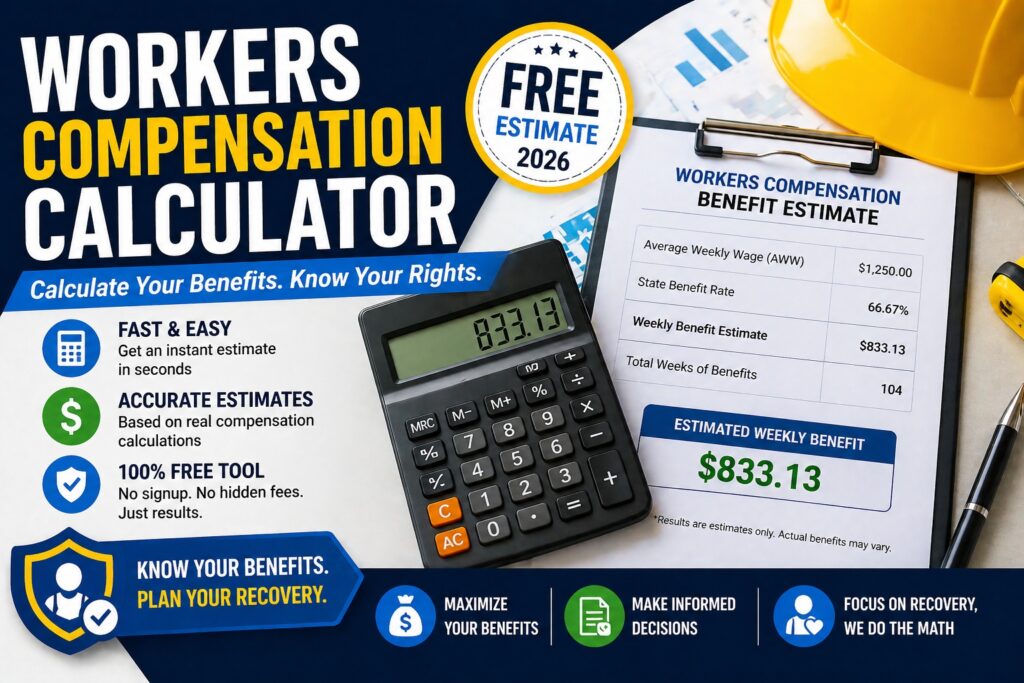
If you want to get a rough idea of what your benefits might look like, try the Workers Compensation Calculator to estimate your payments based on your state and wages.
What Types of Benefits Does Workers Comp Actually Cover?
When people ask how much does workers comp pay, they usually mean the weekly wage replacement. But workers comp actually covers a few different things.
Medical Benefits All necessary medical treatment related to your injury should be covered. That includes doctor visits, hospital stays, surgeries, physical therapy, and prescription medications. You generally do not pay out of pocket for approved treatment.
Lost Wage Benefits This is the weekly check most people are thinking about. It replaces part of your income while you cannot work. The exact amount depends on your state rules and your average weekly earnings.
Permanent Disability Benefits If your injury leaves you with a lasting impairment, you may receive additional compensation. This could be a lump sum or ongoing payments, depending on how serious the disability is and whether it affects your ability to work long term.
Vocational Rehabilitation If you cannot return to your old job, some states offer job training or retraining programs to help you find new work.
How Much Does Workers Comp Pay by Injury Type?
The type of injury you have plays a big role in the total amount you receive, especially if you end up with a permanent impairment.
Temporary Total Disability (TTD) This is when you’re completely off work while you heal. Most states pay around 66% of your average weekly wage for this period. So if you made $900 a week, you might get about $600 per week.
Temporary Partial Disability (TPD) This applies when you can do some work but not your full duties, maybe light duty or fewer hours. You get a reduced benefit to make up the difference in pay.
Permanent Partial Disability (PPD) Once your doctor says you’ve reached maximum recovery, they may assign you an impairment rating. That rating determines how much does workers comp pay for your permanent condition. A higher rating means more compensation.
Permanent Total Disability (PTD) If you can never return to work in any capacity, some states provide lifetime benefits. Others set a time limit. This is the most serious category and often involves the highest payouts.

For back injuries specifically, settlements can vary widely. You can learn more about what to expect in our guide on Workers Compensation Settlements for Back Injury.
State by State Differences: Why Location Matters So Much
One of the biggest factors in how much does workers comp pay is simply where you live. Every state runs its own workers compensation system with its own rules, benefit caps, and formulas.
Here’s a general comparison to give you a sense of how different things can be:
| State | Approx. Max Weekly Benefit (2026) | Wage Replacement Rate |
|---|---|---|
| California | ~$1,619 | 66.67% |
| Texas | ~$1,013 | 70% |
| Florida | ~$1,197 | 66.67% |
| New York | ~$1,145 | 66.67% |
| Georgia | ~$800 | 66.67% |
These numbers can change, and your actual benefit depends on your specific wages and situation. Always check with your state’s workers comp board or a local attorney for the most accurate numbers.
Does Workers Comp Pay for All Lost Wages?
No, not all of them. Workers comp typically replaces about two thirds of your gross wages, not your full paycheck. This means you will likely take home less than you did before the injury.

One reason for this is that workers comp benefits are usually not taxed. So even though you’re getting less on paper, the take home difference is not as large as it looks. You can read more about how this works in our article on Are Workers Compensation Benefits Taxable.
Also, most states have a waiting period before payments begin, often around three to seven days. If you’re out of work for long enough, they may pay you retroactively for that waiting period too. Find out more about timing in our post on When Does Workers Compensation Start Paying.

What Can Reduce How Much Workers Comp Pays You?
There are several things that can lower your benefit amount or cut it off entirely.
Returning to Light Duty Work If your employer offers you a modified job within your restrictions and you refuse it without a good reason, your benefits may be reduced or stopped.
Reaching Maximum Medical Improvement (MMI) Once your doctor says you’ve recovered as much as you’re going to, the temporary disability payments usually stop. At that point, you may move into a settlement or permanent disability phase.
Disputes and Denials Sometimes insurers dispute claims and delay or reduce payments. If your claim was denied, do not give up. There are steps you can take to fight back.
Going Back to Full Duty Once you return to your regular job at your regular pay, benefits end.
How Long Does Workers Comp Keep Paying?
How much does workers comp pay over your lifetime depends a lot on how serious your injury is and how long recovery takes.
For temporary injuries, benefits usually last until you can return to work or reach MMI. For more severe injuries with permanent impairment, payments can continue for years. In the case of total permanent disability, some states pay for life.
The average claim lasts a few weeks to several months, but complex injuries like spinal cord damage or amputations can result in much longer benefit periods.
Use our Lost Wage Calculator to get a sense of what your total lost income might look like based on your recovery timeline.
Tips to Make Sure You Get Paid What You Deserve
Getting the right amount requires you to be proactive. Here are a few things that can protect your benefits.
Report your injury right away. Delays in reporting can give insurers a reason to question your claim.
See an approved doctor. In many states, you must see a doctor within the workers comp network, at least initially.
Keep all records. Document every medical visit, every prescription, and every day you missed work.
Do not accept the first offer without reviewing it. Settlement offers from insurance companies are often lower than what you may actually deserve.
Know your rights. Understanding how much does workers comp pay in your state is the first step to making sure you are not shortchanged.
When Should You Talk to a Lawyer?

If your claim is denied, delayed, or you feel the payment amount is wrong, it might be time to get legal help. A workers comp attorney usually works on contingency, meaning they only get paid if you win. They can help you appeal a denial, negotiate a better settlement, and make sure all your benefits are properly calculated.
Final Thoughts: Know Your Numbers Before You Settle
How much does workers comp pay is not a one size fits all answer. It depends on your wages, your state, your injury, and how long you are out of work. But now you have a solid foundation to understand what to expect.
Do not leave money on the table. Use the tools and resources available to you, ask questions, and do not be afraid to push back if something seems wrong.
If you are not sure where to start, try the Workers Compensation Calculator or the Lost Wage Calculator to get a quick estimate of what your benefits should look like.
Additional 80+ Free Online Tools ToolsMaverick
You deserve to recover without worrying about money. Understanding how much does workers comp pay is one of the most important steps in protecting yourself after a workplace injury.
Have questions about your workers comp benefits? Drop them in the comments below, or share this post with someone who needs it. The more people know their rights, the better off we all are.