

Introduction
Getting hurt at work is stressful enough. But then the bills keep coming, and your paycheck stops. The first question most injured workers ask is: when does workers’ comp start paying lost wages?

It is a fair question, and honestly, a lot of people do not get a straight answer. Some are told to wait. Some get conflicting information from HR and the insurance company. And some just sit there wondering what is going on.
This guide is going to break it all down in plain English. No legal jargon. No confusing back-and-forth. Just a clear walkthrough of how the payment timeline works, what can slow things down, and what steps you can take to protect yourself.
Whether you are dealing with a brand new claim or you have been waiting weeks for your first check, keep reading. This is exactly what you need to know.
When Does Workers’ Comp Start Paying Lost Wages? (Quick Answer)

Here is the short version: when does workers’ comp start paying lost wages depends on your state, but most states require a waiting period of 3 to 7 days before payments begin.
After that waiting period, if your injury keeps you out of work for a certain number of additional days (called the “retroactive period”), you may also get paid for those first few days you missed.
In most cases, you should expect your first check within 14 to 21 days after your claim is accepted. Some states are faster. Some are slower. And some insurance companies drag their feet.
The bottom line is this: payments do not start the moment you get hurt. There is a process, and knowing that process helps you set realistic expectations and catch any delays early.
How Many Days Before Lost Wage Payments Begin
Most states have what is called a “waiting period.” This is basically a built-in delay before your lost wage benefits kick in.
Here is how it typically works:
You get injured. You miss work. The clock starts. Depending on your state, you usually need to miss between 3 and 7 consecutive days before you are eligible for lost wage payments through workers’ comp.
If your injury is severe enough that you miss more days than the state’s retroactive threshold, you may also go back and get paid for those first waiting period days. But if you only miss the minimum, those initial days are usually not paid.
This can feel unfair, especially if you are living paycheck to paycheck. But it is part of how the system is designed.
What Is the Workers’ Comp Waiting Period
The waiting period is the gap between the day of your injury and the day your lost wage benefits can legally begin. Most states set this at 3 to 7 days.
Think of it like an insurance deductible, but in time instead of money. The idea behind it is to prevent claims for very minor injuries where the person only misses a day or two.
During this waiting period, you are typically still entitled to medical benefits. So your doctor visits and treatments should be covered. It is just the wage replacement part that has not started yet.
If you want to understand how your specific state handles this, check out this helpful guide on Workers Compensation Benefits by State which breaks it all down clearly.
Do You Get Back Pay for Waiting Days
This depends on how long you end up being out of work.
Most states have what is called a “retroactive period.” Here is an example of how it works:
Say your state has a 7-day waiting period and a 14-day retroactive period. If you are out of work for 15 days or more, you get paid for all 15 days, including those first 7. But if you are only out for 10 days, you would not get paid for the first 7.
So yes, you can get back pay for waiting days, but only if your total time off work crosses a certain threshold. That threshold varies by state.
How Long Does It Take to Get the First Workers’ Comp Check
Once your claim is accepted, most states give the insurance company between 14 and 21 days to send your first payment.
But here is the reality: a lot of injured workers wait longer than that. Delays happen for many reasons, which we will get into shortly.
The claim filing process itself takes some time too. You report the injury, your employer files the claim, the insurance company reviews it, and then a decision is made. All of that can take days or even weeks before you see a single dollar.
To get a better idea of how long your specific situation might take, you can use a Claim Timeline Estimator to map out the expected steps and dates.
What Can Delay Lost Wage Payments
There are several common reasons why when does workers’ comp start paying lost wages gets pushed back further than it should.
Incomplete paperwork. If your claim form is missing information, the insurance company has a reason to pause everything until it is corrected.
Employer disputes. If your employer disagrees that the injury happened at work, they can contest the claim, which triggers an investigation.
Medical documentation gaps. If your doctor has not submitted the right paperwork proving you are unable to work, payments can be held up.
Insurance company delays. Some insurers use delay tactics on purpose, hoping you will give up or settle for less.
Claim investigation. If there is any question about the nature of your injury, the insurer may investigate before approving benefits.
Staying on top of your paperwork and following up regularly can help speed things along. You might also want to read this article on Workers Compensation Claims Adjuster Mistakes to Avoid to know what to watch out for.
What Happens If Your Employer Delays the Claim
Your employer plays a big role in how fast the process moves. After you report your injury, your employer is usually required by law to file the claim with their insurance company within a specific number of days — typically 3 to 10 days depending on the state.
If your employer drags their feet, it pushes back the entire timeline. In some cases, employers delay on purpose to avoid a workers’ comp claim showing up on their record.
If you suspect your employer is stalling, you have options. You can file the claim directly with your state’s workers’ comp board, or you can consult with a workers’ comp attorney. You should not have to wait indefinitely because of employer inaction.
Why Insurance Companies Delay Wage Payments
Insurance companies are businesses. Their goal is to pay out as little as possible. That does not mean every delay is intentional, but some definitely are.
Common tactics include asking for more documentation repeatedly, claiming they never received paperwork you already sent, or stretching out the investigation period longer than necessary.
Knowing this upfront helps you stay proactive. Keep copies of everything. Send documents by certified mail or email so you have proof. And do not hesitate to follow up consistently.
How Much of Your Lost Wages Does Workers’ Comp Pay
Here is something many people do not know going in: workers’ comp does not replace 100% of your paycheck.
Most states pay between 60% and 70% of your average weekly wage. Some states go up to 80%. The specific percentage depends on where you live and the nature of your disability.
The reason it is not 100% is partly to keep the system sustainable and partly because workers’ comp wage benefits are generally not taxed as income. So even though you get less, you keep more of it.
To figure out what your specific benefit amount might look like, try using this Lost Wage Calculator to get an estimate based on your earnings.
What You Need Before Payments Can Start
Before when does workers’ comp start paying lost wages becomes a reality for you, there are several things that need to be in place:
Your injury must be reported to your employer in writing. Most states have a deadline for this, often 30 to 90 days from the injury date.
A formal workers’ comp claim must be filed. Your employer does this with their insurance company, or you can do it through your state board.
Medical documentation must confirm your injury and show that it prevents you from working. Your treating doctor plays a major role here.
The insurance company must review and accept your claim. This review period can take a week or more.
Once all of that is done, the payment clock officially starts.
Does Medical Approval Affect Lost Wage Benefits
Yes, absolutely. Your medical treatment and your lost wage benefits are connected.
If a doctor has not officially declared you unable to work, the insurance company may not approve your lost wage payments. You need a written statement from your doctor, sometimes called a “work excuse” or “disability slip,” that says you cannot return to your normal job duties.
This is why it is important to be honest and thorough with your treating physician. Do not downplay your symptoms. If you are in pain and cannot work, make sure that is clearly documented.
Can You Receive Lost Wages While on Light Duty
This is a situation a lot of injured workers face. Your employer offers you a light duty position while you recover, but it pays less than your regular job.
In most states, if you accept a light duty job that pays less than your pre-injury wages, you can still receive partial workers’ comp benefits to make up the difference. This is called “temporary partial disability.”
If your employer offers you light duty that is within your medical restrictions but you refuse it without a good reason, you may lose your lost wage benefits entirely. So be careful about how you handle this situation.
What Happens If Your Claim Is Denied

A denied claim does not mean the end of the road. But it does mean more work for you.
If your claim is denied, you have the right to appeal. The process varies by state, but usually involves requesting a hearing before a workers’ comp judge or board.
Many workers who are denied end up winning on appeal, especially with the help of a workers’ comp attorney. You can learn more about your options at What If Workers Comp Claim Is Denied.
Time matters here. Most states have strict deadlines for appeals, so do not wait if you get a denial letter.
What to Do If Your Workers’ Comp Check Is Late
If you have been waiting longer than 21 days and have not received payment, here is what you should do:
First, call your claims adjuster and ask for a status update. Get the name of the person you spoke with and write down what they said.
Second, contact your state’s workers’ compensation board and file a complaint if the delay seems unreasonable.
Third, consider consulting with a workers’ comp lawyer. Many work on contingency, meaning you pay nothing unless you win.
Do not just sit and wait. The squeaky wheel gets the grease in this system.
State Waiting Period Differences (Texas, California, Florida, etc.)

Every state handles the waiting period differently. Here is a quick overview:
| State | Waiting Period | Retroactive Period |
|---|---|---|
| California | 3 days | 14 days |
| Texas | 7 days | 14 days |
| Florida | 7 days | 21 days |
| New York | 7 days | 14 days |
| Illinois | 3 days | 14 days |
| Pennsylvania | 7 days | 14 days |
| Ohio | 7 days | 14 days |
If you want a deeper breakdown by state, this guide on Workers Compensation Benefits by State goes into much more detail.
Real Examples of Lost Wage Payment Timelines
Example 1: James works in a warehouse in California. He sprains his back lifting boxes and misses 10 days of work. His employer files the claim on day 3. The insurance company accepts it on day 10. His first check arrives on day 21. He also receives back pay for the first 3 waiting period days because he missed more than 14 days total.
Example 2: Maria works in Florida and injures her wrist. She misses 8 days of work. Because Florida’s retroactive period is 21 days, and she did not miss that many, she does not get paid for the first 7 days. Her first check covers only day 8 and beyond.
Example 3: David is in Texas and his employer disputes his claim. The investigation takes 30 days. David does not receive any lost wage payments during that time. After the investigation, his claim is accepted and he receives back pay from the accepted date forward.
These examples show how when does workers’ comp start paying lost wages can look very different from person to person depending on timing, state rules, and employer cooperation.
Tools to Estimate Lost Wage Benefits
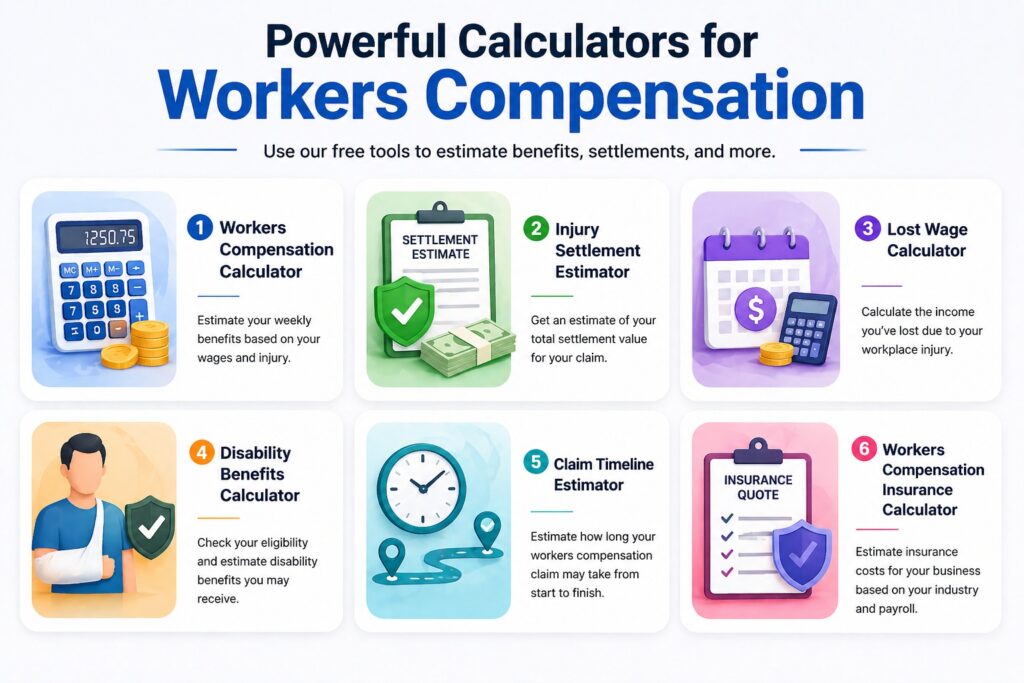
Not sure how much you might receive or how long the process will take? These free tools can give you a solid starting point:
Lost Wage Calculator — Estimate your weekly benefit amount based on your pre-injury wages.
Claim Timeline Estimator — Get a rough idea of when you might receive your first payment based on your state and situation.
Workers Compensation Calculator — A broader tool to estimate total benefits including medical and wage replacement.
Disability Benefits Calculator — Helpful if your injury results in a long-term or permanent disability rating.
These tools are not substitutes for legal advice, but they give you a much clearer picture of what to expect.
Additional 80+ Free Online Tools ToolsMaverick
FAQs
When does workers’ comp start paying lost wages after I report my injury? Usually 14 to 21 days after your claim is accepted, not from the day you reported the injury.
Can I get workers’ comp lost wages if I only miss a few days? Only if you miss more days than your state’s waiting period. For shorter absences, you typically do not receive wage benefits.
Does workers’ comp pay 100% of my wages? No. Most states pay 60 to 70 percent of your average weekly wage.
What if my employer says I was not hurt at work? Your employer can dispute the claim, but you have the right to appeal. Document everything and consider speaking with a lawyer.
Is there a limit on how long I can receive lost wage benefits? Yes. Temporary disability benefits usually stop when you return to work, reach maximum medical improvement, or hit your state’s maximum benefit duration.
Do I need a lawyer to get lost wages paid? Not always, but if your claim is delayed, disputed, or denied, a lawyer can make a big difference.
Conclusion
Understanding when does workers’ comp start paying lost wages is one of the most important things you can do after a workplace injury. Waiting for that first check while bills pile up is genuinely stressful, and the system is not always straightforward.
The key takeaways are simple. There is usually a waiting period before payments begin. Payments do not cover 100% of your wages but are generally not taxed. Delays happen, but you have rights if they go too long. And if your claim is denied, you can fight it.
Do not just hope the money shows up. Stay involved in your claim, keep records, and reach out to your state’s workers’ comp board if something feels wrong. You deserve the benefits you are entitled to.
If you want to dig deeper, check out the Workers Compensation Claim Process guide to understand each step from start to finish.
And if you are still unsure about your situation, use the Lost Wage Calculator to get a clearer picture of what your benefits could look like.
You got hurt doing your job. The system exists to help you. Make sure you use it.