
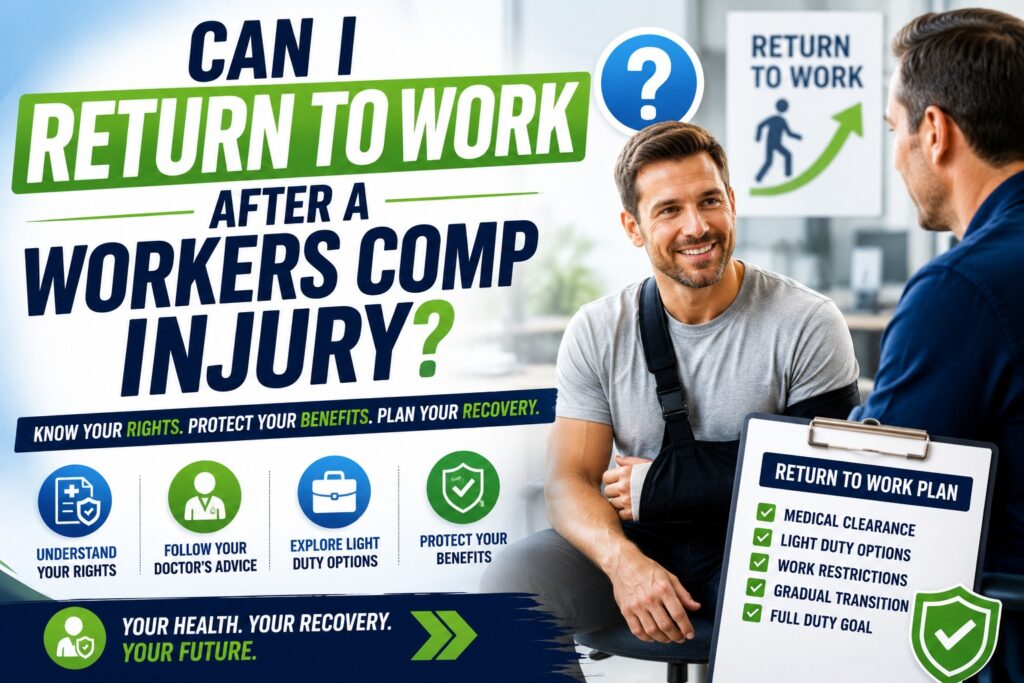
Can I Return to Work After a Workers Comp Injury?
So you got hurt at work. You filed your claim, you have been dealing with doctors and paperwork, and now the big question is sitting right in front of you: can I actually return to work after a workers comp injury?

The short answer is yes, in most cases you can. But the real answer is a little more detailed than that. Going back to work after a workplace injury is not just about feeling better. It involves your doctor, your employer, your insurance company, and your own comfort level. This guide walks you through everything in plain, simple terms so you know exactly what to expect.
What Does “Returning to Work” Actually Mean After an Injury?
When people talk about return to work after workers comp injury, they usually picture going straight back to their old job doing the exact same things they did before. But that is not always how it works.
There are actually a few different ways this can happen depending on your injury and how far along you are in recovery.
Full duty return means you go back and do everything you used to do, no restrictions.
Light duty return means you go back but with some limits. Maybe you cannot lift heavy things, or you need to sit more, or your hours are reduced.
Modified duty return is similar to light duty but your employer changes your job tasks a bit to fit what your body can handle right now.
Knowing which category applies to you makes a big difference in how you plan your return to work after workers comp injury.
Who Decides When You Can Go Back?
This is one of the most common questions people have. The answer is your treating physician, also called your workers comp doctor.
Can I Return to Work After a Workers Comp Injury?
Your doctor will evaluate your recovery and either:
- Give you a full release to return to work
- Give you a release with restrictions
- Say you are not ready to go back yet
You should never return to work after a workers comp injury before your doctor clears you. If you do, you risk making the injury worse and you could also hurt your claim.
If your employer is pressuring you to come back before your doctor says it is okay, that is a red flag. You have the right to follow your doctor’s medical advice. If you are unsure about your rights in this situation, check out this helpful guide on Can I Be Fired While on Workers Compensation? to understand what protections you have.
What Is Maximum Medical Improvement (MMI)?
You will often hear the term MMI when talking about return to work after workers comp injury. MMI stands for Maximum Medical Improvement. It means your doctor believes your condition has improved as much as it is likely to with treatment.
Reaching MMI does not mean you are 100% better. It just means you have gotten as better as you probably will. At this point, your doctor will assess whether you have any permanent limitations and decide your work status.
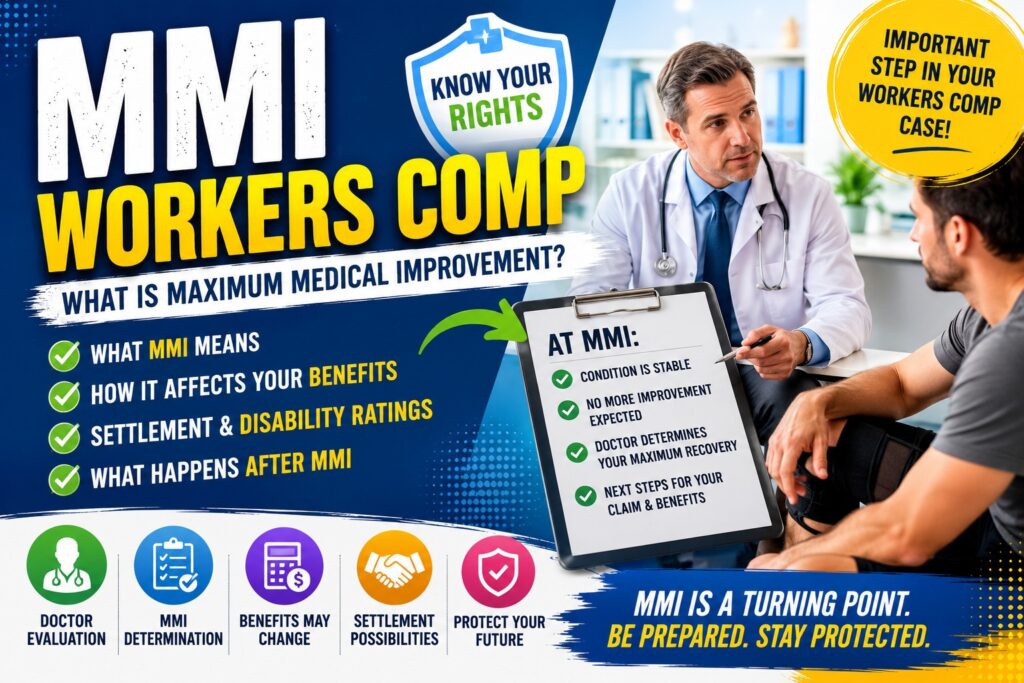
Reaching MMI is often the turning point in deciding how and when you go back to work. You can learn more about what this means for your claim at MMI Workers Comp.
What If Your Employer Cannot Accommodate Your Restrictions?
This is a situation many injured workers face. Your doctor says you can return to work after workers comp injury but only with restrictions, and your employer says they cannot give you lighter work.
In this case, a few things might happen:
- You may continue receiving temporary disability benefits while you recover more
- You may need to look for other work that fits your restrictions
- A vocational rehabilitation program might be available to help you train for a different type of job
This situation can get complicated, and it is often worth talking to a workers comp attorney if your employer is not cooperating. Read more about when legal help makes sense in Do I Need a Lawyer for Workers Compensation?

What Happens to Your Benefits When You Go Back to Work?
This is what worries most people. Will I lose my benefits if I return to work after workers comp injury?
Here is how it generally works:
If you go back full duty, your temporary disability payments will stop since you are earning your regular wages again.
If you go back on light duty at reduced hours or pay, you may still receive partial wage replacement benefits to make up the difference.
Permanent disability benefits may continue even after you return to work if your injury left you with lasting limitations.
The key thing to understand is that returning to work does not automatically end all your benefits. It depends on what type of benefits you were receiving and what kind of return you are doing.
| Return Type | Temporary Benefits | Permanent Benefits |
|---|---|---|
| Full duty return | Stop | May continue if permanent damage exists |
| Light duty return | Partial benefits may continue | Evaluated separately |
| Cannot return | Continue until resolved | Determined at MMI |
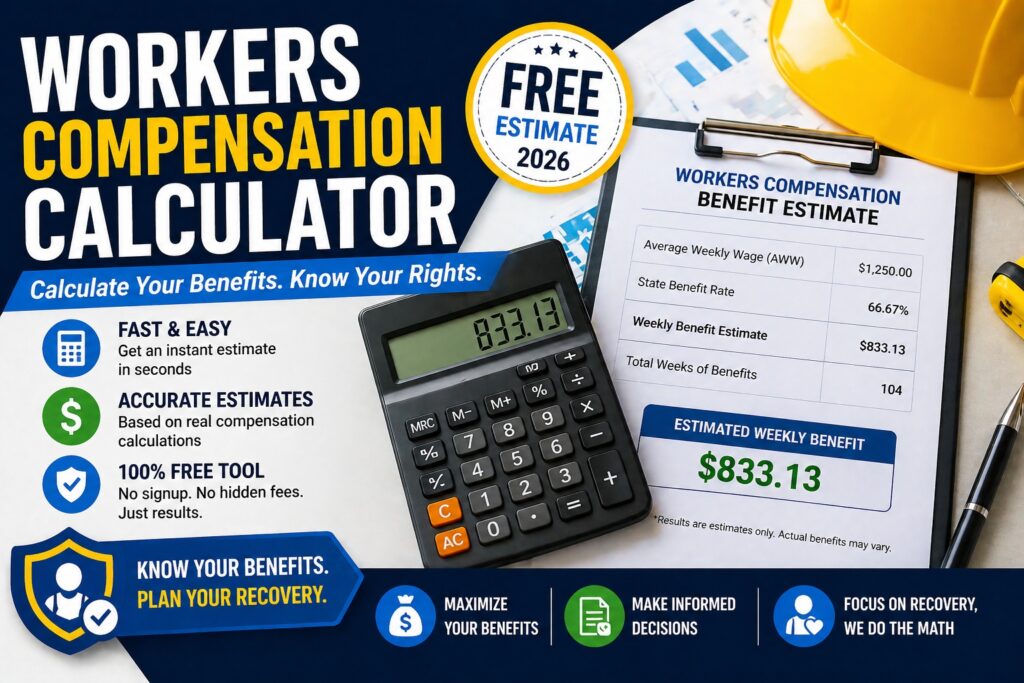
To get a sense of what your benefits might look like, use the Workers Compensation Calculator to estimate your numbers.
70+ Free Online Tools Retirement saving & Lots more @ ToolsMaverick.cloud
What If You Try to Return to Work and Cannot Handle It?
Sometimes people attempt to return to work after workers comp injury and realize too quickly that they are not ready. Maybe the pain is too much, or your body just cannot keep up with the demands of the job.
If this happens, do not push through it. Tell your supervisor and contact your doctor right away. You may need to go back on temporary disability while you continue recovering.
Going back and then having to stop again does not look bad on your claim as long as you are following proper procedures and keeping your doctor informed. It is better to be honest than to hurt yourself further.
Steps to Take Before You Return to Work
Here is a simple checklist to follow before you officially return to work after workers comp injury:
- Get written clearance from your doctor. Never rely on a verbal conversation alone.
- Review any work restrictions carefully. Make sure you understand exactly what you can and cannot do.
- Notify your employer in writing. Give them your return date and a copy of your work restrictions.
- Talk to your claims adjuster. Let them know you are returning and what your restrictions are so your benefits are adjusted correctly.
- Keep records of everything. Dates, conversations, emails, doctor notes, all of it.
Being organized protects you if any problems come up later.
Can Your Employer Refuse to Let You Come Back?
In most states, your employer is required to let you return to work after workers comp injury if your doctor clears you, even with restrictions, as long as they can accommodate those restrictions.
If your employer refuses to bring you back and a suitable position is available, that could be considered retaliation, which is illegal in most places. This is a serious situation that usually requires legal advice.
Situations like these are exactly why having a workers comp attorney in your corner can make a difference. Use the Claim Timeline Estimator to understand where you are in the process and what steps might still be ahead.
Emotional Side of Going Back to Work
Not enough people talk about this part. For many workers, return to work after workers comp injury is not just physically challenging. It is emotionally difficult too.
You might feel anxious about getting hurt again. You might worry that your coworkers or boss will treat you differently. You might feel behind or like your confidence has taken a hit.
These feelings are completely normal. Give yourself time to adjust. Talk to someone if the anxiety is affecting your daily life. And remember, taking care of your mental health is just as important as your physical recovery.
A Quick Note on Light Duty Work
Some injured workers feel pressured to accept light duty jobs that have nothing to do with their actual skills or career. While you generally should accept reasonable light duty offers, the work has to be within your restrictions and genuinely suitable.
If you are being asked to do something that seems like it is designed to frustrate you into quitting, or that is clearly outside your medical restrictions, document everything and speak with an attorney.
Final Thoughts
Return to work after workers comp injury is a process, not a single event. It takes patience, communication with your doctor and employer, and a clear understanding of your rights.
You do not have to rush it. You do not have to accept work that puts you at risk. And you do not have to navigate it alone.
Take the steps one at a time, stay organized, and lean on the right resources when you need them. Your health comes first, and a smooth return to work after workers comp injury is absolutely possible when done the right way.
Have questions about your workers comp case or return to work timeline? Drop them in the comments below, or explore more helpful guides on our site. Your recovery matters and so do your rights.