
If you got hurt at work and have been going through the workers comp process, you have probably heard the term MMI thrown around. It can feel confusing, even a little scary. What does it actually mean? Does it mean your benefits are ending? Do you still get treatment? What happens to your case?
This guide breaks down everything you need to know about MMI workers comp in plain, simple language. No legal jargon. Just real answers to real questions.
What Is MMI in Workers Comp?
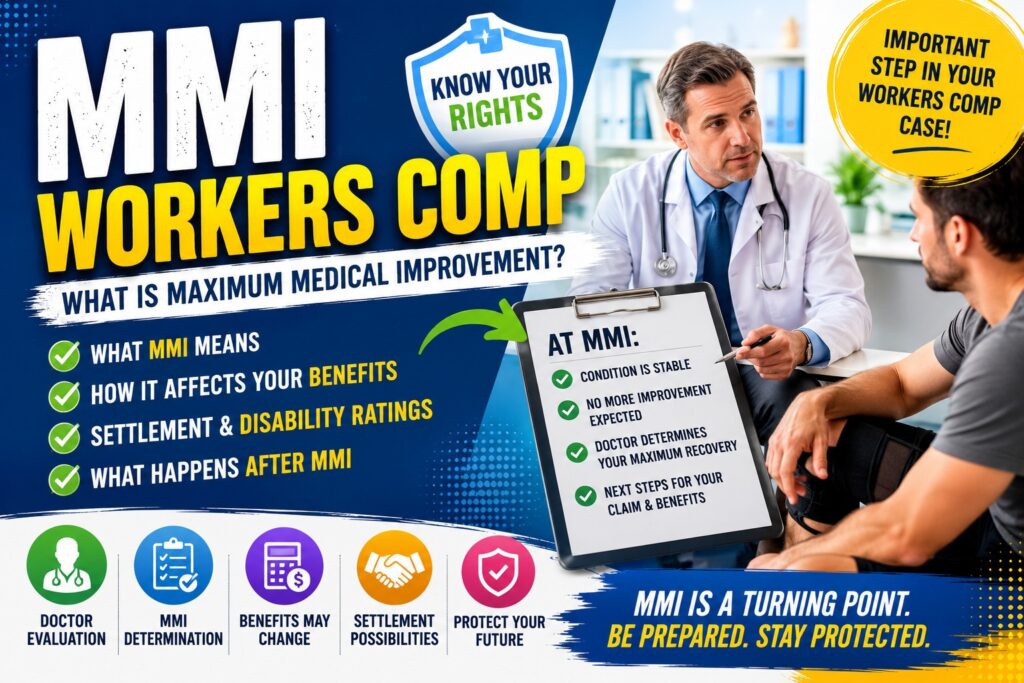
MMI stands for Maximum Medical Improvement. In a workers comp case, MMI workers comp means that your doctor believes your condition has gotten as better as it is likely to get with further treatment. It does not always mean you are fully healed. It means your recovery has reached a point where it has leveled off.
Think of it like this: your body has done most of its healing, and any future treatment would only help manage your condition rather than improve it further.
What Maximum Medical Improvement Actually Means
A lot of injured workers think MMI means the insurance company is done with them. That is not exactly true. MMI workers comp is a medical term, not a financial cutoff. It simply marks a point in your recovery timeline where doctors believe further significant improvement is unlikely.
Once you reach this point, your workers comp case moves into a new phase. Benefits may change, a settlement discussion may begin, and your permanent condition may be evaluated. It is one of the most important moments in your entire workers comp journey.
Who Decides When You Reach MMI
This is where things can get tricky. The doctor treating you, often called the authorized treating physician, usually makes the MMI determination. However, your employer’s insurance company may also send you to an Independent Medical Examination (IME), where a doctor they choose evaluates you.
These two doctors do not always agree. The treating doctor might say you still need more time to heal, while the insurance doctor might say you have already reached MMI workers comp status. This disagreement can affect your benefits, and it is one reason many workers choose to get legal help.
Your own doctor’s opinion matters. If your doctor disagrees with the IME finding, you have the right to challenge it.
Signs You May Have Reached MMI
You might be approaching MMI if:
Your symptoms have stayed the same for several weeks or months. Your doctor says there is not much more treatment can do. You are no longer getting better with physical therapy or other care. Your doctor starts talking about a permanent disability rating. The insurance company requests an independent examination.
These are signals that the MMI workers comp conversation is coming. Being prepared helps you make better decisions.
Does MMI Mean You Are Fully Recovered?
No. This is one of the biggest misunderstandings about MMI workers comp. Reaching MMI does not mean you are pain free or back to the way you were before your injury. Many workers are at MMI but still live with chronic pain, limited movement, or an inability to do certain types of work.
MMI simply means your condition has stabilized. You may still need ongoing care to manage your symptoms. Your quality of life may be permanently affected. The system acknowledges this, which is why permanent disability ratings and long term benefits exist.
What Happens After You Reach MMI in Workers Comp
After your doctor officially declares MMI, several things typically happen:
Your temporary disability payments usually stop. The focus shifts to permanent disability benefits if you have lasting impairment. A permanent disability rating is assigned based on how much your injury affects your ability to work and function. Settlement negotiations may begin. You may be offered a lump sum or structured payments in exchange for closing your claim.
Understanding what comes next in MMI workers comp cases helps you avoid making rushed decisions that cost you money later.
Can Workers Comp Benefits Stop After MMI
Yes, certain benefits can stop after MMI. Specifically, temporary total disability benefits, which are the weekly wage replacement payments you receive while you are recovering, often end at MMI because you are no longer in a temporary healing phase.
However, benefits do not disappear entirely. If you have a lasting impairment, you may qualify for permanent partial disability or permanent total disability benefits. These are calculated differently and depend on the severity of your condition.
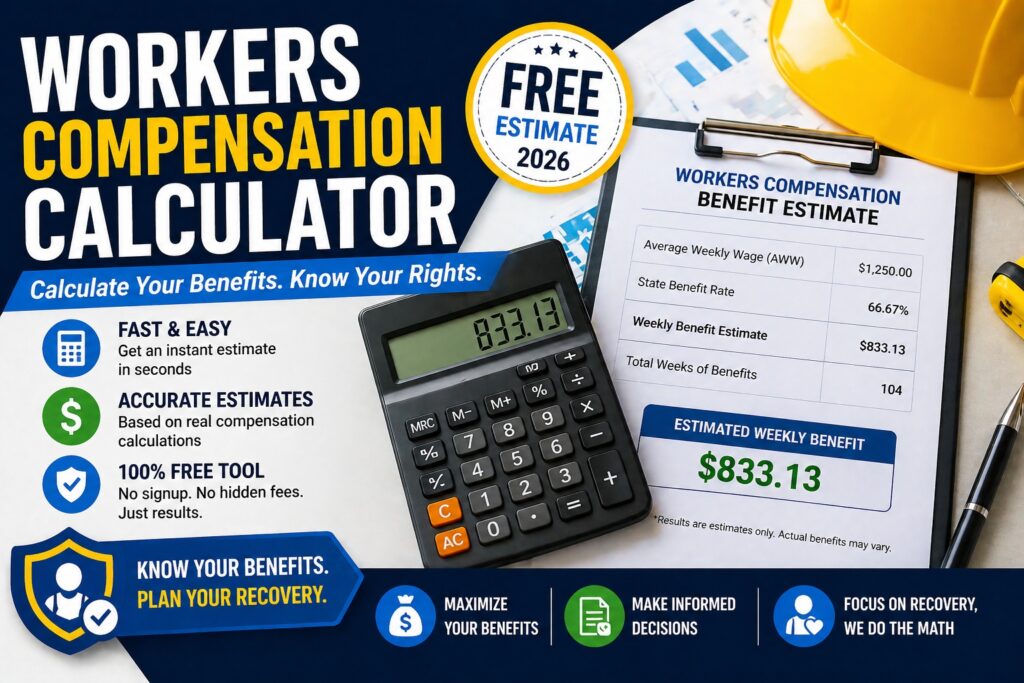
To get a better idea of what you might be entitled to, you can use a Workers Compensation Calculator to estimate your benefit amount based on your specific situation.
It is also worth reading about how workers comp benefit amounts vary by state since the rules differ quite a bit depending on where you live.

How MMI Affects Your Settlement Amount
MMI workers comp is directly tied to your settlement value. Before MMI, your case is still open and evolving. After MMI, the full picture of your injury is clearer, which makes settlement discussions more meaningful.
Your settlement amount depends on factors like your permanent disability rating, your ability to return to work, your future medical needs, your average weekly wage before the injury, and the state where your injury occurred.
Here is a simplified breakdown:
| Factor | Impact on Settlement |
|---|---|
| High permanent disability rating | Increases settlement value |
| Inability to return to your old job | Increases settlement value |
| Future medical care needed | Increases settlement value |
| Mild impairment, full return to work | Lower settlement value |
| State with lower benefit caps | Reduces maximum payout |
For a more personalized estimate, try the Injury Settlement Estimator to see what your case might be worth.
Permanent Disability Ratings After MMI
Once you reach MMI workers comp status, a doctor will assign you a permanent disability rating. This rating is expressed as a percentage and represents how much your injury has permanently impaired your body or ability to work.
For example, a 20% whole body impairment rating means your injury has reduced your overall physical function by 20%. This percentage is then used to calculate your permanent disability benefits.
Different states use different rating systems. Most use the AMA Guides to Evaluation of Permanent Impairment as a standard reference.
Can You Still Receive Medical Treatment After MMI
Yes. Reaching MMI does not mean all medical treatment stops. What typically ends is treatment aimed at improving your condition. Treatment aimed at maintaining your current condition, managing pain, or preventing further decline can often continue.
This might include prescription medications, pain management visits, periodic check ins with a specialist, and assistive devices like braces or equipment.
What is covered after MMI depends on your specific case and state law. Some states are more generous than others when it comes to ongoing medical benefits.
What If You Disagree With the MMI Decision
You have options if you think you were declared at MMI workers comp too soon. Here is what you can do:
Get a second opinion from your own physician. Request a formal hearing or appeal through your state’s workers comp board. Ask your attorney to challenge the IME doctor’s findings. Gather medical records that support the need for continued treatment.
Do not just accept a finding you believe is wrong. Insurance companies have a financial reason to push for early MMI determinations. You have every right to push back.

For guidance on what to do if your claim runs into problems, check out this post on what to do if a workers comp claim is denied.
Can You Return to Work After Reaching MMI
It depends. Some workers reach MMI workers comp and are fully capable of returning to their previous job. Others can return to work but in a limited capacity, maybe part time or in a different role. And some workers are simply unable to return to any meaningful employment because of their injuries.
Your ability to return to work affects your benefits. If you can return to your old job at full capacity, your wage replacement benefits will likely end. If you can only do lighter work at lower pay, you may qualify for partial disability benefits to make up the difference.
MMI vs Permanent Disability Explained
People sometimes confuse MMI and permanent disability. They are related but not the same thing.
MMI is the point where your recovery has stabilized. Permanent disability is the lasting impairment you have after reaching MMI. Not everyone who reaches MMI qualifies for permanent disability benefits. And not every disability is visible or severe enough to trigger the highest benefit levels.
Think of MMI as the finish line of your recovery phase, and permanent disability as the starting line of your long term benefit phase.
How Insurance Companies Use MMI in Claims
Here is something important to understand. Insurance companies pay attention to MMI workers comp timing for a reason. Once MMI is declared, they often push for settlement as quickly as possible, sometimes before you fully understand what your case is worth.
They may offer a lump sum that seems generous but does not account for your future medical needs or lost earning capacity. This is why knowing your rights and the true value of your case before signing anything is so important.
Insurance companies are businesses. Their goal is to close claims at the lowest possible cost. Yours is to get fair compensation for your injury.
Common Mistakes Injured Workers Make After MMI
Here are mistakes to avoid after reaching MMI workers comp status:
Accepting the first settlement offer without consulting a lawyer. Stopping treatment before your condition has actually stabilized. Not appealing an MMI decision you believe is premature. Failing to document your symptoms and limitations. Missing deadlines for filing for permanent disability benefits.
Each of these mistakes can cost you thousands of dollars in lost compensation. Take your time, get informed, and do not rush.
Real Examples of MMI Workers Comp Cases
Example 1: A warehouse worker injured his back lifting heavy boxes. After surgery and physical therapy, his doctor declared MMI workers comp at 12 months post injury. He was assigned a 15% permanent impairment rating. He was able to return to light duty work and received a structured settlement for his permanent disability.
Example 2: A nurse suffered a severe knee injury on the job. She reached MMI but could no longer stand for long shifts. She was declared permanently and totally disabled in her occupation and received ongoing wage replacement benefits plus a settlement covering future medical care. Her situation is similar to cases covered in our guide on workers compensation settlements for knee injuries.
Example 3: A construction worker disagreed with the insurance company’s IME, which declared MMI after only six months. His attorney requested an independent evaluation that contradicted the finding. His benefits continued for several more months, and he received a significantly larger settlement.
Should You Hire a Lawyer After Reaching MMI
In many cases, yes. MMI workers comp is the point where your case value is determined, settlement talks begin, and the insurance company becomes most aggressive in trying to close your claim.
A workers comp lawyer can help you understand your true benefit value, challenge a premature MMI finding, negotiate a fair settlement, ensure future medical costs are included, and protect your rights at every step.
Most workers comp attorneys work on a contingency basis, meaning they only get paid if you win. This makes legal help accessible even if you are not currently working.
To learn more about whether you need legal help, read this detailed post on do you need a lawyer for workers compensation.

Tools to Estimate Benefits and Settlement Value
Before you make any decisions about your MMI workers comp case, it helps to have a rough idea of what you might be entitled to. Here are some free tools you can use:
Workers Compensation Calculator to estimate weekly benefits based on your wages and state rules.
Injury Settlement Estimator to get an idea of what your case settlement might look like based on your injury type and disability rating.
These tools are not a substitute for legal advice, but they give you a starting point before you talk to an attorney or negotiate a settlement.
Start Planning from now! With our Retirement Saving Calculator
FAQs (Common Questions)
Q: Does MMI mean I am done with workers comp forever? A: Not necessarily. MMI ends temporary benefits but permanent disability benefits and ongoing medical care may continue depending on your condition and state laws.
Q: Can I dispute an MMI finding? A: Yes. You can get a second opinion, request a hearing, or have an attorney challenge the finding on your behalf.
Q: How long after MMI can I settle my case? A: There is no fixed timeline. Some cases settle within weeks of MMI, others take months. Never rush into a settlement without understanding your full benefit entitlement.
Q: What if I get worse after MMI? A: If your condition worsens after MMI, you may be able to reopen your claim. This is called a petition to reopen and it is possible in most states if there is a documented change in your medical condition.
Q: Does MMI workers comp affect my right to sue? A: In most cases, workers comp is your exclusive remedy, meaning you cannot sue your employer separately. However, if a third party caused your injury, such as a defective tool manufacturer, you may still have a separate personal injury claim.
Conclusion
MMI workers comp is a turning point in your injury claim. It changes what benefits you receive, how your case is valued, and what options you have going forward. Understanding what it means gives you power in a process that can otherwise feel completely out of your control.
Do not let an insurance company rush you. Do not sign a settlement without knowing what your case is truly worth. And do not assume that reaching MMI means the end of your benefits.
Take the time to learn your rights, use the free tools available to estimate your compensation, and seriously consider speaking with a workers comp attorney if your situation is complicated.
Your injury has already cost you enough. Make sure your workers comp claim gives you the full protection and compensation you deserve.