
Introduction
If you hurt your knee at work, you are probably wondering how much money you might get. A workers comp knee injury settlement can be life-changing, especially when your injury is serious enough to keep you from working or doing everyday tasks.
Knee injuries are some of the most painful and disruptive injuries a worker can face. Whether you slipped on a wet floor, fell from a ladder, or twisted your knee lifting something heavy, the road to recovery can be long and expensive. Medical bills pile up, paychecks stop coming in, and the stress can feel overwhelming.
The good news is that workers compensation is designed to help you through exactly this kind of situation. But getting a fair workers comp knee injury settlement is not always simple. Insurance companies do not always make it easy, and many workers end up accepting far less than they deserve.
In this guide, we will walk you through everything you need to know, from average settlement amounts to the mistakes you should avoid. Let us break it all down in plain, simple language.
Workers Comp Knee Injury Settlement: Quick Overview
A workers comp knee injury settlement is a payment you receive to resolve your workers compensation claim after a knee injury on the job. Instead of ongoing weekly payments, you get one lump sum that covers your medical costs, lost wages, and sometimes permanent disability.
Here is a quick summary of what matters most:
- The severity of your injury plays the biggest role in your settlement amount
- Whether you had surgery usually increases the value of your claim
- Permanent damage or disability ratings can significantly raise your payout
- Your state’s workers comp laws affect how settlements are calculated
- Having the right documentation makes a huge difference
Most workers comp knee injury settlements are negotiated between your attorney (if you have one), the insurance company, and sometimes a judge or mediator.
Average Workers Comp Settlement for Knee Injuries
So what is the average payout? This is the question most injured workers ask first, and the honest answer is that it varies widely.
Minor knee injuries with no surgery and full recovery might settle for anywhere between $10,000 and $30,000. Moderate injuries that require surgery but lead to a good recovery often settle in the range of $30,000 to $75,000. Severe injuries with permanent damage, limited mobility, or the need for a knee replacement can reach $100,000 or even higher.
Here is a general breakdown:
| Injury Severity | Estimated Settlement Range |
|---|---|
| Minor sprain or strain | $5,000 to $20,000 |
| Meniscus tear (no surgery) | $15,000 to $35,000 |
| ACL tear with surgery | $40,000 to $80,000 |
| Total knee replacement | $75,000 to $150,000+ |
| Permanent partial disability | $50,000 to $200,000+ |
These are rough estimates. Your actual workers comp knee injury settlement depends on your specific state, your doctor’s findings, your wage, and many other factors.
You can get a rough idea of what you might be owed by using the Injury Settlement Estimator or the Workers Compensation Calculator available online.
Why Knee Injuries Often Lead to Higher Settlements
Knees are complex joints. When something goes wrong, the damage can be permanent and the treatment expensive. That is why knee injury claims tend to be larger than, say, a wrist sprain.
Here are a few reasons knee injuries get higher settlements:
The cost of knee surgery alone can run $20,000 to $50,000 or more. Physical therapy after surgery can last months or even years. Many knee injuries result in long-term limitations that affect your ability to work. Some knee conditions get worse over time, especially if you stand or walk a lot at work.
All of these costs factor into a workers comp knee injury settlement. Insurance companies know these cases are expensive, which is also why they often push back on claims or try to minimize the severity of your injury.
Common Workplace Knee Injuries That Qualify

Not every knee problem automatically qualifies for workers compensation. The injury needs to be directly connected to your job. That said, many common workplace knee injuries do qualify.
Some of the most frequently seen knee injuries in workers comp claims include:
Torn ACL or MCL from sudden twisting or falling. Meniscus tears from repetitive kneeling or twisting. Knee fractures from falls or being struck by heavy objects. Bursitis caused by extended kneeling on hard surfaces. Tendinitis from repetitive motions over time. Dislocated kneecap from slips or falls.
Jobs that put workers at high risk include construction, warehouse work, nursing, retail, farming, and manufacturing. If your knee was injured while performing your job duties, you likely have a valid workers comp claim.
Learn more about what injuries qualify for workers compensation to make sure your case is covered.
ACL Tears, Meniscus Injuries, and Knee Surgery Settlements
ACL tears and meniscus injuries are among the most common serious knee injuries workers face. Both can be debilitating and often require surgery.
An ACL tear happens when the ligament that stabilizes your knee is damaged, usually from a sudden stop, pivot, or fall. These injuries almost always require surgery and months of physical therapy. They also carry a higher risk of long-term knee problems.
Meniscus injuries involve damage to the cartilage in your knee. Depending on severity, treatment might involve rest and physical therapy, or it might require surgery. Partial meniscus removal or repair is common, and recovery can take several months.
For both types of injuries, a workers comp knee injury settlement will typically include the cost of surgery, all follow-up care, lost wages during recovery, and any permanent disability benefits if you do not fully recover.
How Knee Surgery Changes Settlement Value
Surgery dramatically increases the value of a workers comp knee injury settlement. Here is why: surgery means higher medical costs, longer recovery time, more lost wages, and a greater chance of permanent limitations.
When you have knee surgery as part of your workers comp case, your settlement should cover all surgical costs, including the surgeon, anesthesiologist, hospital stay, and follow-up visits. It should also cover physical therapy, any assistive devices like crutches or a knee brace, and any future medical treatment related to the surgery.
If your surgeon recommends a second surgery or a full knee replacement down the road, that future cost should be included in your settlement too. This is a critical point many workers miss, so make sure your claim accounts for potential future medical needs.
Permanent Knee Damage and Disability Ratings
If your knee never fully heals, you may be entitled to permanent disability benefits. Doctors assign a disability rating, which is a percentage that reflects how much function you have lost.
For example, a 20% permanent partial disability rating to your knee would qualify you for a specific number of weeks of benefits, depending on your state. A higher rating means a higher workers comp knee injury settlement.
Some states use a schedule of injuries, meaning a knee injury gets a set number of benefit weeks. Other states base the payout on your earning capacity loss. Either way, having a clear and documented disability rating from your doctor is essential to maximizing your settlement.
Can You Return to Work After a Serious Knee Injury?
This is one of the most important questions in any workers comp knee injury settlement discussion. Whether you can return to your old job, or any job, directly affects how much compensation you deserve.
If you can return to your exact job without restrictions, your settlement will likely be on the lower end. If you can return to work but only in a lighter capacity or a different role, you may be entitled to wage loss benefits. If you cannot return to work at all, your settlement could be significantly higher.
Some workers are placed on permanent restrictions like no lifting over 20 pounds, limited standing or walking, or no climbing ladders. These restrictions narrow your job options and strengthen your claim for higher compensation.

How Walking, Standing, and Mobility Affect Compensation
Many jobs require constant standing, walking, bending, or climbing. If your knee injury limits any of these, it can have a major impact on your ability to earn a living.
Insurance companies and courts look closely at your functional limitations when calculating a workers comp knee injury settlement. Your doctor’s functional capacity evaluation (FCE) and any restrictions written in your medical records carry significant weight.
If you work in a physically demanding job and can no longer perform those duties because of your knee, make sure your doctor clearly documents these limitations. This documentation can be the difference between a fair settlement and a lowball offer.
Physical Therapy and Long-Term Recovery Costs
Knee injuries often require months of physical therapy. Each session costs money, and those costs add up fast. A full course of physical therapy after knee surgery might run $5,000 to $15,000 or more depending on how many sessions you need.
Your workers comp knee injury settlement should include all physical therapy costs, both past and future. If your doctor expects you to need ongoing therapy to maintain knee function, that future cost belongs in your settlement too.
Do not let the insurance company exclude these long-term costs from your settlement offer. Always have your attorney or a medical professional review the expected future treatment needs before you agree to any final number.
What Insurance Companies Look for in Knee Injury Claims
Insurance companies are not on your side. Their goal is to pay out as little as possible. Knowing what they look for can help you protect your claim.
They will look at whether you reported the injury right away. Delays in reporting raise red flags. They will review your medical records to see if you had any prior knee problems. They will check for any gaps in your treatment, which they may use to argue your injury is not that serious. They will also look at whether you followed your doctor’s orders.
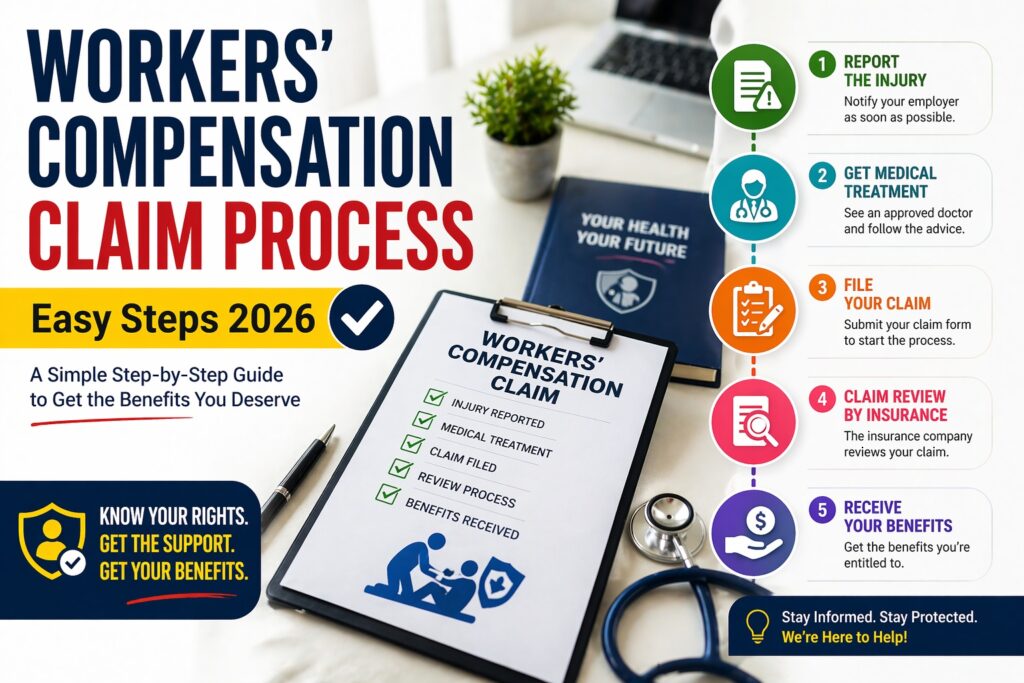
Understanding the workers compensation claim process from the start can help you avoid early mistakes that hurt your case later.
Mistakes That Can Reduce Your Knee Injury Settlement
Many workers unknowingly make mistakes that reduce their settlement value. Here are the most common ones to avoid.
Waiting too long to report the injury. Every state has a deadline, and missing it can mean losing your right to compensation entirely. Not getting medical treatment right away. If you wait, the insurance company will argue your injury is not serious. Posting on social media. Photos or posts showing you walking fine or being active can be used against you. Accepting the first offer. The first offer from an insurance company is almost always lower than what you deserve. Not hiring an attorney. Without legal help, most workers leave money on the table.

If your claim was denied, do not give up. Learn what to do if your workers comp claim is denied and how to fight back.
How Doctors and MRI Reports Affect Your Case
Your medical records are the foundation of your workers comp knee injury settlement. Without solid documentation from a doctor, your claim is much harder to prove.
An MRI is one of the most important diagnostic tools for knee injuries. It can show torn ligaments, cartilage damage, fluid buildup, and other problems that X-rays might miss. A detailed MRI report from your doctor that clearly describes the injury and connects it to your workplace accident is incredibly powerful evidence.
Make sure you see a doctor as soon as possible after your injury. Be honest and specific about your symptoms and how the injury happened. Every detail in your medical records can affect your settlement.
Real Knee Injury Settlement Examples
Looking at real-world examples can help you understand what to expect from a workers comp knee injury settlement.
A warehouse worker in Texas who tore his meniscus lifting heavy boxes received a settlement of $42,000 after surgery and four months of physical therapy.
A construction worker in California who suffered a complete ACL tear from a fall settled for $95,000, which included future medical costs and permanent work restrictions.
A retail employee in Florida with a knee fracture from a slip and fall received $28,000 after a short recovery with no surgery required.
A nurse in New York who needed a total knee replacement after years of repetitive strain received a structured settlement worth over $180,000.
These examples show how widely settlements can vary. Every case is different, which is why getting personalized advice matters so much.
When to Accept or Reject a Settlement Offer
Knowing when to accept a settlement offer is one of the hardest parts of the process. Accept too early and you might leave thousands of dollars on the table. Wait too long and you risk prolonged stress and legal fees.
You should generally accept an offer if it covers all your medical costs including future treatment, compensates for all your lost wages, accounts for your permanent disability rating, and comes close to or exceeds what a workers comp attorney thinks is fair.
You should reject or negotiate an offer if it does not cover your future medical needs, ignores your permanent restrictions, or is significantly lower than comparable cases in your state.
Always review an offer carefully before signing. Once you sign, your case is closed and you typically cannot go back for more money.
You can get a clearer picture of timelines by using the Claim Timeline Estimator to understand how long the process typically takes in your state.
Should You Hire a Lawyer for a Knee Injury Claim?

For minor injuries, you might be able to handle your claim on your own. But for anything involving surgery, permanent damage, or a dispute with the insurance company, hiring a workers compensation attorney is almost always the right move.
An experienced attorney knows the value of your workers comp knee injury settlement, knows how to negotiate with insurance companies, and can make sure your future medical needs are included in any offer.
Most workers comp attorneys work on contingency, which means they only get paid if you win. Their fee comes out of your settlement, so you do not need money upfront to hire one.
Learn more about whether you need a lawyer for workers compensation and when it makes the most sense to get legal help.
Tools to Estimate Your Settlement and Lost Wages
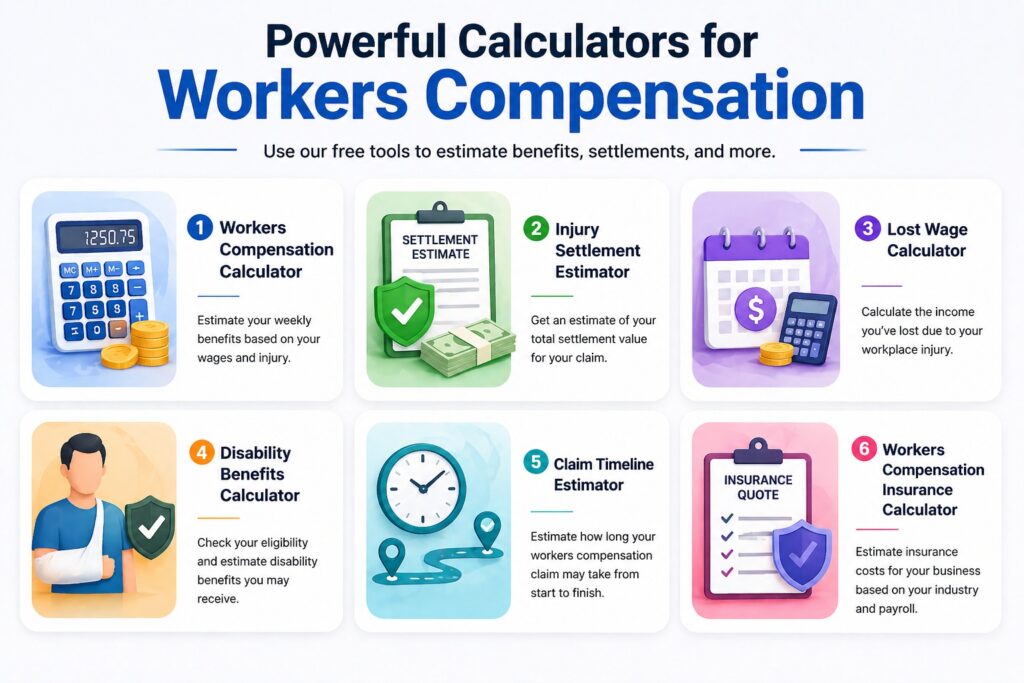
Before meeting with an attorney or negotiating with an insurance company, it helps to have a rough idea of what your claim might be worth.
Here are some free tools that can help:
The Workers Compensation Calculator helps you estimate your weekly benefits based on your wage and state. The Injury Settlement Estimator gives you a ballpark settlement range based on your injury type and severity. The Lost Wage Calculator helps you figure out how much income you have lost during your recovery.
These tools will not replace legal advice, but they are a great starting point for understanding what you might be owed.
Secure Your Retirement Start Planning from now!
FAQs: Common Questions About Workers Comp Knee Injury Settlements
How long does a knee injury workers comp case take? It depends on the severity of your injury. Minor cases might resolve in a few months. Complex cases involving surgery or permanent disability can take one to two years or longer.
Can I get a settlement if I had a prior knee injury? Yes. If your work injury made a pre-existing condition worse, you can still file a claim. The insurance company may try to reduce your payout, but you are still entitled to compensation for the worsening of your condition.
What if my employer says the injury is my fault? Workers compensation is generally a no-fault system, meaning you do not need to prove your employer was negligent to get benefits. You just need to show the injury happened while you were working.
Can I choose my own doctor? This depends on your state. Some states allow you to choose your own treating physician. Others require you to see a company-approved doctor, at least initially.
What if the insurance company says my knee injury is not work-related? If your claim is denied on this basis, you can appeal. Medical records, witness statements, and expert opinions can help prove the connection between your injury and your job.
Conclusion
Dealing with a knee injury at work is stressful enough without having to fight for fair compensation. A workers comp knee injury settlement should give you peace of mind and financial stability while you recover, not added headaches.
The key takeaways are simple. Report your injury right away. Get medical treatment and follow your doctor’s instructions. Document everything. Do not accept the first offer without reviewing it carefully. And consider hiring an attorney if your case is serious or disputed.
You deserve to be compensated fairly for what happened to you. Take the time to understand your rights, use the tools available to estimate your benefits, and do not let the insurance company push you into a settlement that does not cover your real needs.
If you found this guide helpful, share it with someone who might need it. And if you are ready to take the next step, start by using the Workers Compensation Calculator or reaching out to a licensed workers comp attorney in your state today.