
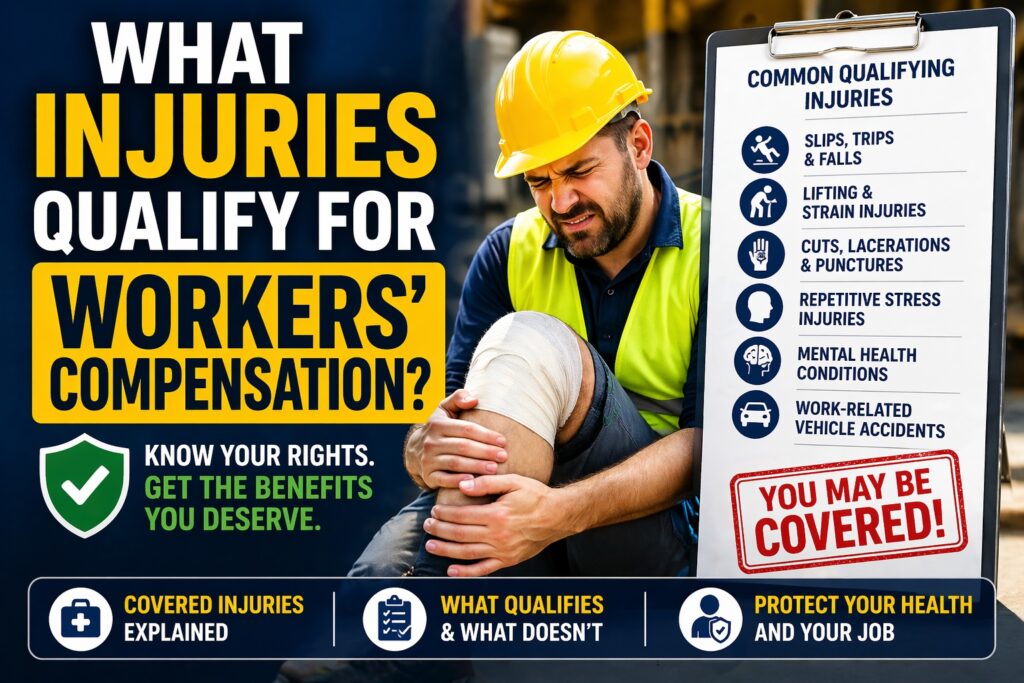
Getting hurt at work is scary. One moment you’re going about your day, and the next, you’re in pain, confused, and wondering what happens next. One of the first questions people ask is: what injuries qualify for workers compensation?
It’s a fair question and an important one. Workers compensation exists to protect you. It’s a type of insurance your employer carries that helps cover your medical bills and lost wages if you get injured on the job. But not every injury automatically qualifies. There are rules, conditions, and sometimes a bit of a process involved.
This guide is written in plain, simple language no legal jargon, no confusing terms. Whether you slipped on a wet floor, developed back pain from years of lifting, or are struggling mentally after a traumatic workplace event, this post will help you understand where you stand.

What Does It Mean for an Injury to Qualify?
When people ask what injuries qualify for workers compensation, they’re really asking: “Will I be covered if something happens to me at work?”
For an injury to qualify, it generally needs to meet two main conditions:
- It happened at work or because of work. This means the injury occurred while you were doing your job duties — either at your workplace or somewhere else you were sent for work purposes.
- It caused you some kind of harm. This includes physical pain, a medical condition, lost ability to work, or in serious cases, permanent disability.
If both of these are true, there’s a strong chance your injury qualifies. But let’s break this down further so you know exactly what types of injuries are covered.

Types of Injuries That Qualify for Workers Compensation
Physical Injuries That Qualify
These are the most straightforward cases. If you get physically hurt while doing your job, you’re likely covered. Some common examples include:
- Slips, trips, and falls — One of the most common workplace injuries. Whether you slipped on a wet floor or tripped over equipment, this qualifies.
- Falls from height — Common in construction, roofing, and warehouse work.
- Being struck by an object — If something falls on you or hits you at work, that counts.
- Cuts and lacerations — Especially common in kitchen, factory, or construction settings.
- Burns — From chemicals, heat, or electrical sources at work.
- Broken bones — From an accident, fall, or being caught in machinery.
- Eye injuries — Caused by flying debris, chemicals, or bright lights.
- Back and spinal injuries — Very common, especially among people who do physical work.
These are the types of injuries most people picture when they think about workplace accidents — and yes, they clearly fall under what injuries qualify for workers compensation.

Repetitive Stress and Occupational Injuries
Not all injuries happen in one dramatic moment. Some build up slowly over time. These are called repetitive stress injuries or occupational injuries, and they absolutely count.
Examples include:
- Carpal tunnel syndrome — Caused by typing or repetitive hand movements over months or years.
- Tendinitis — Inflammation in tendons from repeated motion.
- Hearing loss — From working in loud environments like factories or construction sites.
- Chronic back pain — From years of lifting heavy items.
- Knee damage — From constant kneeling or climbing.
These are trickier to prove because there’s no single accident to point to. But they are a recognized and valid part of what injuries qualify for workers compensation. The key is showing that the job caused or significantly contributed to the condition.
Mental Health and Psychological Claims
This one surprises a lot of people. Yes, mental health injuries can qualify for workers compensation — but the rules vary depending on your state or country.
Mental health claims are generally accepted when:
- You witnessed a traumatic event at work (like a serious accident or violence)
- You developed PTSD from a workplace incident
- Extreme and documented work-related stress led to a diagnosed condition like anxiety or depression
- You were a victim of workplace harassment or abuse that caused a mental breakdown
It’s important to note that general job stress — like a tough boss or a heavy workload — usually doesn’t qualify on its own. But if a specific event at work caused a real, diagnosed mental health condition, that’s a different story.
Mental health claims are growing, and more states are recognizing them as part of what injuries qualify for workers compensation.

Injuries That May Not Qualify
Knowing what doesn’t qualify is just as useful. Here are some situations where a claim might be denied:
| Situation | Why It May Not Qualify |
|---|---|
| Injury happened while commuting | Generally not covered unless using a company vehicle |
| Injury during lunch break off-site | Not considered work time |
| Injury caused by being intoxicated | Most states deny claims if drugs or alcohol were involved |
| Pre-existing condition, no work connection | Must show work made it worse |
| Injury from a fight you started | Aggressor is usually not covered |
| Injury while doing personal tasks at work | Not part of your job duties |
These are not automatic disqualifiers in every case, but they are common reasons claims get denied. If you’re unsure, it’s always worth consulting with a workers comp attorney.
Work-Related vs Non-Work-Related Injuries
The biggest dividing line in understanding what injuries qualify for workers compensation is whether the injury is work-related.
A work-related injury is one that happened:
- During work hours, on company property
- While performing job duties, even off-site (like a delivery driver)
- As a direct result of your work conditions (like a chemical exposure)
A non-work-related injury is one that happened:
- At home, on a personal errand, or during personal time
- From a pre-existing condition that has nothing to do with your job
- During an activity not connected to your employment
The line isn’t always black and white. For example, if you travel for work and get hurt in a hotel, that might qualify. Each situation is unique, which is why documenting everything matters so much.
Common Examples of Qualifying Injuries
Here’s a quick list of real-world examples that typically qualify:
- A nurse hurts her back lifting a patient
- A warehouse worker drops a box on his foot
- A chef gets burned by hot oil
- An office worker develops carpal tunnel after years of data entry
- A construction worker falls off a ladder
- A retail employee slips on a freshly mopped floor
- A firefighter develops PTSD after responding to a fatal accident
- A factory worker loses partial hearing from years of loud machinery
All of these fit into the category of what injuries qualify for workers compensation because they happened at work, during work duties, and caused real harm.
How to Prove Your Injury Qualifies
Even if your injury clearly qualifies, you still need to prove it. Here’s how:
- Report it immediately — Tell your employer as soon as the injury happens. Delays can hurt your claim.
- Get medical attention — See a doctor right away. Medical records are your most important proof.
- Document everything — Write down what happened, where, when, and who saw it.
- Gather witness statements — If coworkers saw the incident, ask them to write down what they observed.
- Follow your doctor’s advice — Missing appointments or ignoring treatment can be used against you.
- Keep copies of everything — Medical bills, forms, emails — save it all.
The more evidence you have, the easier it is to show that your injury falls under what injuries qualify for workers compensation.
Learn More About Workers Compensation Eligibility
Understanding what injuries qualify for workers compensation is just one part of the process. You can also read our detailed guide on How to Qualify for Workers’ Compensation to understand full eligibility rules, or explore How to Work Out Workers Compensation to see how your benefits are calculated once your injury is approved.
What to Do After a Workplace Injury
Here’s a simple step-by-step guide if you’ve been hurt at work:
- Get safe — Move away from any immediate danger.
- Seek medical help — Even if it seems minor, get checked out.
- Report to your employer — Do this in writing if possible.
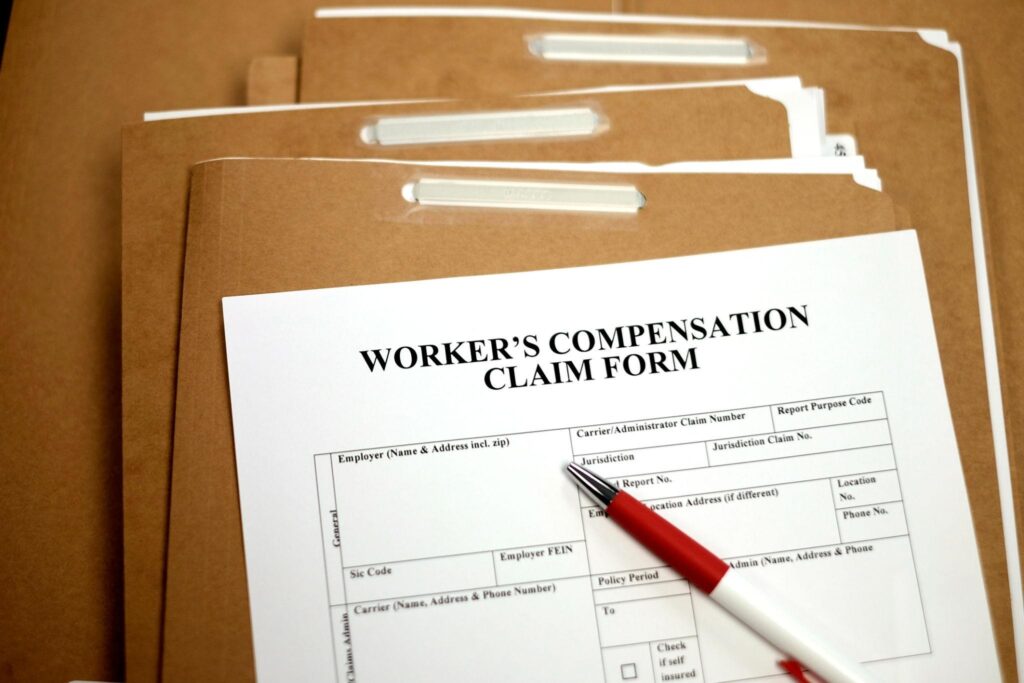
- File a workers comp claim — Your employer or HR department should give you the forms.
- Follow up — Stay in contact with your employer and insurance company.
- Consult a lawyer if needed — If your claim is denied or disputed, a workers comp attorney can help.
Don’t wait and hope it gets better on its own. Acting quickly protects both your health and your legal rights.
FAQs
Can I file a claim for an old injury that got worse at work? Yes. If your job made a pre-existing condition significantly worse, you may still qualify for workers compensation.
What if my employer says I don’t qualify? You have the right to dispute their decision. File a formal claim and consider getting legal advice.
Do part-time workers qualify? In most places, yes. Part-time employees are generally covered under workers comp laws.
What if I work from home? Remote workers can qualify too. If you were injured while doing actual work tasks — like tripping over your laptop cord during a work call — it may count.
How long do I have to file a claim? This varies by state, but most have a deadline of 1 to 3 years from the date of injury. Don’t wait too long.
Estimate Your Workers Compensation Benefits
Once you understand what injuries qualify for workers compensation, the next step is estimating how much you may receive. You can use our Workers Compensation Calculator to get a quick estimate of your weekly payments or try the Injury Settlement Estimator to understand the potential value of your claim based on your injury and recovery time.
Plan Your Retirement Savings Now! with our User Friendly Tool
Conclusion
Understanding what injuries qualify for workers compensation doesn’t have to be complicated. The basic rule is simple: if you got hurt because of your job, you deserve protection. Whether it’s a sudden accident, a condition that developed over time, or even a mental health struggle caused by your work environment — these things matter, and there are systems in place to help you.
The most important thing you can do is act fast, document everything, and don’t be afraid to ask for help. Workers compensation exists for a reason — to make sure that when your job hurts you, you’re not left dealing with the consequences alone.
If you found this guide helpful, share it with someone who might need it. And if you’re currently dealing with a workplace injury, don’t wait — report it today and know your rights.