

Introduction: Getting injured on the job can be scary, but knowing how to qualify for workers compensation helps protect your rights and finances. Workers’ compensation is a state-based insurance system that pays for medical bills and lost wages after a job-related injury or illness. To qualify, you generally must be an employee (not an independent contractor) hurt on the job, report the injury promptly, and meet any state deadlines. In this guide we explain, in simple terms, what it means to qualify, who is covered, and how to file a claim. We also cover exceptions and common pitfalls, with real-world examples and tips. By the end, you’ll understand exactly how to qualify for workers compensation, step by step.

What Does It Mean to Qualify for Workers Compensation?
To qualify for workers compensation, your injury or illness must be work-related and you must be a covered employee. In practice, understanding how to qualify for workers compensation means you meet all legal conditions so you can file a claim and get benefits. In most states, the four basic qualifications are:
(1) you were an employee when hurt, (2) your employer had workers’ comp insurance, (3) the injury occurred in the scope of work, and (4) you reported and filed the claim on time. If any one of these is missing, your claim can be denied. For example, slipping and hurting your back at work usually qualifies, but hurting yourself at home after work doesn’t count as work-related. Qualifications vary by state, but the core idea is the injury must “arise out of and in the course of” your job duties. That way, benefits only go to employees harmed by their work.
Basic Requirements to Qualify
There are a few straightforward requirements to meet before you can qualify for benefits. Understanding how to qualify for workers compensation starts with meeting these basic conditions:
- You must be an employee: Only workers in an employer-employee relationship are covered. Being paid a wage or salary (with tax withholding or a W-2) usually means you’re an employee. Independent contractors, consultants, and freelancers typically do not qualify. (See a later section on employees vs. contractors.)
- Your employer must have coverage: If your company doesn’t carry workers’ comp insurance, you may still recover through a state uninsured employer fund or by suing, but you can’t file a normal claim. In most states, even small businesses have to buy coverage. For example, Kentucky requires every employer with one or more workers to carry a policy. (If your employer lacks insurance, states often have special remedies like state funds or penalties.)
- The injury/illness must be work-related: Qualifying injuries include sudden accidents (a fall, machinery accident, etc.) and even gradual conditions (like repetitive strain or occupational disease) caused by your job. If you hurt yourself doing job tasks or were exposed at work (for example, a heavy box falls on your foot, or years of breathing chemicals causes lung disease), that usually qualifies. But injuries from personal tasks or off-the-clock activities (like a car wreck on your way to lunch) normally do not qualify.
- Report and file promptly: You generally must report the injury to your employer “as soon as possible” and follow any state time limits. For example, many states say you must notify within days or weeks. Delaying can give insurers a reason to reject the claim. We’ll cover deadlines and filing tips below, but remember: quick reporting and documentation are key to qualify.
Together, meeting these requirements means your injury fits the legal definition for workers’ comp. Missing even one (for example, if you delay notice or the injury happened outside work) can disqualify you. If you’re unsure, it’s wise to get a doctor’s report confirming the work link and to ask a workers’ comp lawyer for guidance.
Who Is Eligible for Workers Compensation?
In most states, eligible workers include nearly all employees who get hurt performing job duties. That usually covers both full-time and part-time staff, as long as they are truly on the payroll. Even part-timers and temporary hires are generally covered from day one. States do not exclude coverage for workers just because they’re part-time or seasonal. For example, Kentucky law explicitly says part-time, temporary, and seasonal workers do qualify and are covered from their first day on the job. Similarly, interns or probationary employees are typically covered if they’re paid and under employer control. Understanding how to qualify for workers compensation helps clarify why most employees are included under these rules.
However, some categories of workers are often exempt from mandatory coverage. Exempt workers may include agricultural laborers, casual day labor, domestic household workers, or very part-time “casual” employees. These rules vary by state: one state might cover farmworkers while another doesn’t. Also, some states allow volunteer firefighters or emergency responders to collect comp even without wages. In short, if you are on an employer’s payroll (and the employer is required to have coverage), you’re usually eligible for comp benefits if injured at work.
Workers’ comp typically covers any employee hurt doing job duties – whether you’re in a factory, office, or out in the field. Part-time, seasonal, and probationary workers often are covered from day one. This means someone stocking shelves, driving for their job, or even cleaning offices as an employee is generally eligible if injured on the job. The key is the employer-employee relationship; if your boss takes taxes out of your paycheck, you likely qualify. Knowing how to qualify for workers compensation can help you better understand your rights in these situations.
On the other hand, if your employer labeled you a contractor and didn’t take taxes, then you probably don’t qualify under normal rules. (However, misclassification is common; if you believe you were really an employee, you may appeal.) Also, note that “self-inflicted” injuries or those from horseplay may disqualify you. Overall, most workers hurt at work can get comp, but eligibility hinges on employment status and how the injury happened.
Types of Employees Who Qualify
Most employee categories qualify for comp. This includes:
- Full-time and part-time employees: Both are generally covered equally. You don’t have to work a minimum number of hours – an hour or two per week job can qualify.
- Temporary and seasonal workers: Even if you’re hired for only a season or through a temp agency, you’re typically covered while on the job. For temp agency workers, either the temp agency or the client company (depending on control of the work) holds responsibility for comp coverage.
- Probationary and new hires: Coverage usually starts from the first day. You don’t have to wait a “probationary period” to become eligible. If a new employee is injured on day one, they can file a claim just like a long-time worker.
- State or federal employees: Most state/local government workers and federal civilian employees have workers comp, but through special programs. Federal employees use the federal FECA system. Military personnel have separate benefits. (This blog focuses on regular private-sector rules.)
Types of workers often excluded (varies by state) include casual day laborers, independent contractors (discussed next), agricultural labor (in some states), and unpaid volunteers. For example, many states exclude domestic workers (like babysitters or housekeepers) and casual farm workers. If you fall in one of these exempt categories, you may not qualify through workers’ comp, though other remedies might exist.
Injuries That Qualify for Workers Compensation
Qualifying injuries are those caused “out of and in the course of” employment. In plain terms, the accident or exposure must happen while doing your job and be connected to it. Covered injuries typically include:
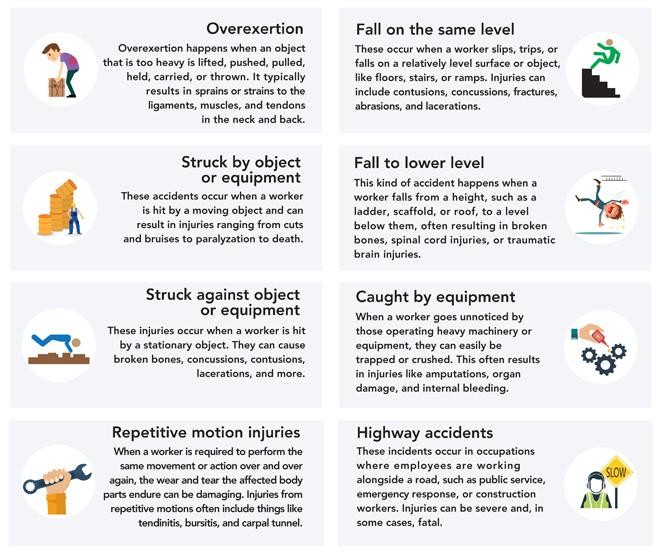
- Sudden accidents: Slip-and-falls, machinery accidents, tool malfunctions, falls, burns, cuts, etc. For example, dropping a heavy box on your foot or falling off a ladder at work would generally qualify.
- Repetitive motion injuries: Conditions like carpal tunnel from typing all day or tendonitis from repetitive lifting. Even though these build up over time, they can qualify if work is the main cause.
- Occupational diseases: Illnesses caused by the work environment. For example, construction workers exposed to asbestos who develop lung disease, or factory workers who get skin rashes from chemicals. Workers’ comp covers long-term occupational illnesses arising from job duties.
- Aggravation of pre-existing conditions: If you had a prior condition that your work re-injures or worsens, it often still qualifies. The key is work must have significantly contributed to the injury.
Here’s a snapshot of typical compensable injuries: falls, sprains, fractures, burns, hearing loss from noise, respiratory issues from fumes, cuts, head injuries, back injuries, and the like. Even serious conditions like heart attacks at work can qualify if caused by work stress.
What doesn’t qualify? Workers’ comp generally excludes injuries not related to your job. For example, a weekend soccer injury or a fight outside work is outside comp coverage. Typical disqualifiers include:
- Self-harm or intentional harm: Injuries you inflicted intentionally on yourself or others usually aren’t covered.
- Horseplay and fights: If you were horsing around or in a fight unrelated to work duties, the claim can be denied.
- Intoxication: If drugs or alcohol played a role, benefits are normally barred. For instance, if you fell because you were drunk on the job, the insurer will likely deny your claim.
- Not following rules: If you were violating clear safety rules (bypassing guards on machines, not wearing required gear) and then got hurt, coverage might be challenged.
- Check Claim Time : Claim Timeline Estimator
In short, if the job caused or contributed to your injury, it qualifies. If the injury happened “off the clock” or from unrelated actions, it will usually not.
Situations Where You May Not Qualify Workers Compensation
Even if you were on the job, certain situations can cut off eligibility:
- Commute injuries: The “going-and-coming” rule generally says your normal commute to/from work is not covered. For example, slipping and hurting yourself in your kitchen before your shift starts typically doesn’t qualify. However, travel during work (like driving to a meeting or injured on a work trip) often does qualify if it’s on the job.
- Injuries during breaks or personal activities: If you hurt yourself during lunch at a restaurant or on a personal errand, that’s outside scope. On a lunch break, the clock may be paused for comp.
- Intoxication or misconduct: As mentioned, injuries under the influence, or from fighting/horseplay, or ignoring safety rules, typically disqualify.
- Pre-existing conditions (if not worsened): If you had an old injury that was 100% healed and got injured doing non-work activities, comp won’t cover it. Only new work-related injuries or aggravations count.
- Independent contractor injuries: If you truly are a contractor (invoice-based work, no payroll taxes, own your tools), you probably aren’t covered at all.
- Undocumented or illegal workers: Coverage rules vary by state, but some explicitly deny comp to undocumented workers, while others protect them.
- Employer policy exclusions: Some states let certain small businesses opt out (like Texas). If your employer legally doesn’t carry comp, you won’t qualify for its benefits, though other remedies (lawsuits, state funds) might exist.
These exclusions show why it’s important to document how and when you got hurt. Always report work-related injuries, even if unsure about coverage. An insurer will decide qualification; you can appeal if denied.
State Differences in Eligibility Rules
Workers’ compensation is state law, so rules can differ. One major difference is which employers must carry insurance and when. For example, some states require any employer with even 1 employee to have coverage, while others set higher thresholds:
| State | Coverage Requirement |
|---|---|
| Alabama | Businesses with ≥5 employees must carry coverage |
| Alaska | All employers with ≥1 employee must carry coverage |
| Arizona | Coverage mandatory once you have ≥1 regular employee |
| Kentucky | Employers with ≥1 employee must carry coverage |
| Texas | Optional – most private employers can choose; not required |
In Alabama, you’re only guaranteed comp benefits if the company has five or more workers. But in Alaska, coverage starts with any single employee. Kentucky and many states require coverage at one or more employees. Texas is unusual: private employers do not have to carry comp insurance, so workers there often have the option to buy it or not. Always check your state’s rules.
There are other state-by-state quirks too. For example, the deadline to report injuries or file a claim can vary from a few days to a year. How states treat commuting injuries or what to do if the employer is uninsured can also differ. If you travel or work across state lines, the law usually looks at where the employment contract was made or where you usually worked to decide which state’s rules apply. In summary, legal eligibility is mostly uniform (be an employee hurt at work), but administrative details like deadlines, coverage thresholds, and claim processes differ by state.
Independent Contractors vs Employees
A key line in workers’ comp is this: Employees qualify, independent contractors usually do not. If your company calls you a contractor (1099 income, set your own hours, supply your own tools, etc.), you generally won’t be eligible under that company’s policy. This is because workers’ comp is insurance that employers purchase for their payroll employees.
However, the distinction isn’t always clear-cut. Courts and agencies look at facts: who controls your work, who provides tools, how you’re paid, etc. Even if you signed a “contractor” form, if you really function as an employee, you might still qualify. Many people get misclassified. For example, if you work full-time, punch a timecard, get W-2s, and have taxes withheld, you’re likely an employee no matter the label.
If a worker is wrongly denied comp due to classification, they can often appeal to be covered like an employee. Some states have special rules covering a few types of contractors (like out-of-state truckers or certain day laborers). If you believe you were misclassified, save any pay stubs, offer letters, or contracts – these can help prove employee status.
Bottom line: When learning how to qualify for workers compensation, confirm that you truly are an employee under the law. If not, you may need to look into other remedies (see below).
What Evidence You Need to Qualify
Strong evidence makes qualifying for benefits much easier. Key documents include:
- Incident report: As soon as you’re hurt, tell your supervisor or HR in writing. Keep copies of any injury reports or forms you file with your employer. Write down details: date, time, location, what you were doing, and how the injury happened. The more detail you record (and witnesses or photos you gather), the clearer your claim.
- Medical records: Seek medical care promptly and get a full report or diagnosis linking your condition to work. For example, if a doctor’s notes say “work-related injury” or mention how the injury occurred, that is powerful evidence. If you delay doctor visits, insurers may doubt the injury’s legitimacy. Copies of prescriptions, test results, treatment notes, and bills all help.
- Employment records: Pay stubs showing your wages or employment status, job descriptions, training certificates (like safety training), and work schedules can establish that you were on the job at the time. If you have a written job offer or contract, it proves the employment relationship.
- Witness statements: Statements from coworkers who saw the accident or who can attest to your working conditions can support your case. Even a brief written note from a witness about what happened can tip the balance if an insurer disputes your story.
- Photographic evidence: If safe, photos of the accident scene, hazardous conditions, or visible injuries (bruises, cuts) can be persuasive. Photos of equipment failures or lack of safety gear might also be useful.
- Time records: Clock-in/clock-out logs can confirm you were on-duty when hurt. Anything timestamped (emails, swipe cards) showing you were at work at the time is helpful.
Gather and preserve these pieces of evidence before talking with insurance. According to experts, medical records are the “foundation of a strong workers’ comp claim”. Pair them with your incident report and witness notes to clearly show how your injury was work-related. Inadequate evidence (like no doctor visits, or no one saw the accident) is a common reason claims are denied.
How to File a Claim to Qualify
Filing a workers’ comp claim typically involves these steps:
- Report the injury immediately: Tell your employer/supervisor right away – ideally in person and in writing. Don’t delay: state law often requires you to notify your employer within a certain period (sometimes just days or weeks) after an injury. If you wait too long, the claim can be thrown out. Always follow your company’s official injury reporting procedure and keep a copy of the written notice.
- Get medical treatment: Go to a doctor or emergency room without delay. Provide the doctor with details on how the injury occurred. Make sure your medical records note the work connection. In most states, once workers’ comp is involved, there may be a list of approved doctors; ask your employer or insurer for that list. Keep copies of all doctor’s reports, prescriptions, and receipts.
- Document everything: Continue to document your injury and treatment. Keep all medical records, bills, and receipts. Write down how pain or disability affects your daily life and work. Preserve any accident photos, witness statements, or equipment that caused the injury (if applicable).
- Notify the insurer/state: In many cases, your employer’s insurance company will handle the claim once reported. Your employer (or you) will submit a formal claim form with the insurer or the state’s workers’ comp board. The exact process depends on your state. For instance, In Kentucky, once you report to your boss, the insurer is notified via state electronic system. Some states have you file directly with a state agency. Check your state’s official workers’ comp website for claim forms and procedures.
- Follow up on the claim: After filing, your insurer should respond (acknowledging receipt) and investigate. Be sure to respond quickly to any requests for more info. You’ll begin getting benefits (medical coverage, and wage loss pay) once the claim is approved. If there’s a delay or denial, you’ll want to appeal or get legal help right away.
In short, to qualify, you must file a claim – meeting deadlines and providing proof. The lawinfo guide advises: you must file your claim within the state deadline or you “could lose your right” to benefits. For example, Pennsylvania law says failing to report in 120 days can eliminate your benefits. Check your state’s filing deadline and forms carefully.
Finally, keep copies of every document you submit. If possible, get written confirmation from your employer or insurer that they received your claim. In complicated cases, a lawyer can help ensure everything is filed correctly and on time.
Common Reasons Claims Get Rejected
Even valid injuries can be denied if the rules aren’t followed or evidence is weak. Common denial reasons include:
- Injury not work-related: If the insurer believes the accident happened off-duty or from personal activities, they’ll deny the claim. (For example, injuries on a lunch break or during a commute usually aren’t covered.)
- Delayed reporting: Waiting too long to tell your employer is a major red flag. Insurers often deny claims if the injury wasn’t reported “as soon as possible”. As noted, prompt reporting helps prove the injury occurred at work.
- Intoxication: Testing positive for alcohol or drugs can void your claim. While you can still see a doctor, if the test shows impairment, expect the insurer to deny.
- No medical evidence: If you didn’t see a doctor or get treatment, there’s no proof of injury. Insurers may say you fabricated injuries without medical records. Always seek medical care for any injury you think merits comp; medical records build your case.
- Missing deadlines: Filing the claim or paperwork late (for example, not submitting a formal claim form within the statutory period) is a common pitfall. Even if you reported the injury, you must follow through with the formal claim in time.
- Horseplay or misconduct: If the accident was caused by horseplay, fighting, or negligence at work, insurers may deny based on misconduct. Rules violations (like not wearing required safety gear) can be used against you.
- Pre-existing condition: Insurers frequently deny when you had a similar pre-existing injury and claim it’s unrelated to the job. If a doctor’s report fails to connect your condition to work, your claim can be kicked out.
- Employer dispute: Sometimes the employer contests the claim (saying you weren’t an employee or hurt on site). Without witnesses, such disputes can lead to rejection. Clear evidence and testimony can counter this.
These issues are avoidable. The best defense is timely reporting, thorough documentation, and compliance with rules. If a claim is denied, it’s not over – you have the right to appeal the decision (often in an administrative hearing). Consulting a workers’ comp attorney can help navigate appeals or fix claim mistakes.
What to Do If You Don’t Qualify
If for some reason you truly don’t qualify (or your claim is denied), you still have options:
- Appeal the decision: Every state has an appeal process for workers’ comp denials. You usually have a strict deadline (often 30-180 days) to file an appeal or petition for benefits. During this process, you present evidence to a board or judge. The earlier sections outlined common denial reasons – if any applied, gather counter-evidence. Many people win on appeal. Lawyers can assist in preparing appeals and representing you. As one guide notes, “if you file a workers’ comp claim and it’s denied, it is possible to appeal the denial”.
- State disability or other benefits: If you’re unable to work but can’t get comp, short-term disability insurance (if offered by some states or employers) might help. A few states have temporary disability programs. For long-term disability (1+ year out of work), federal programs like Social Security Disability Insurance (SSDI) may apply. These require medical proof of total disability unrelated to comp.
- Personal injury lawsuits: If a third party (not your employer) was at fault in your work injury, you might have a personal injury claim (e.g. a negligent driver hit you on a work trip, or a contractor’s bad equipment caused your fall). Workers’ comp usually prevents suing your own employer, but not third parties.
- Sue employer (if uninsured): In states where employers can opt out (like Texas) or fail to insure as required, you may have the right to sue the employer directly. The Kentucky guide notes that if an employer has no coverage, you can collect from a state fund or even sue the employer for pain and suffering.
- Reclassification: If you were classified as a contractor but think you were really an employee, you could contest that classification (sometimes by filing a complaint with labor authorities or in court). Winning that would let you file for comp.
It’s also a good idea to talk to a lawyer. Not qualifying for comp does not always mean you have no recourse. Many lawyers offer free initial consultations and work on contingency. They can help identify the best path: appeal, alternative benefits, or other legal claims. At minimum, know your state’s appeal rights and timelines.
If all else fails, focus on recovering and returning to work. Some people negotiate a settlement or employer leave. Others use short-term savings or disability while planning a comeback. But remember, never assume “no comp = no help”. There are often more options than you realize.
FAQs (Common Questions)
Q: Who exactly is covered by workers’ comp?
A: Generally, almost any employee can qualify. If your employer takes taxes from your pay, you’re likely covered. Full-time, part-time, seasonal – all count. Only a few classes (like casual day laborers, certain agricultural/domestic jobs in some states) might be excluded.
Q: Are independent contractors covered?
A: No. Contractors usually do not qualify for workers’ comp. Only those with an employer-employee relationship do. (If you’re paid by 1099, no coverage, unless you can prove misclassification.)
Q: What kinds of injuries are covered?
A: All work-related injuries and illnesses are generally covered. This includes sudden accidents (like falls, equipment injuries) and diseases from the workplace (like chemical exposure). It also covers worsening of pre-existing conditions due to work. Non-work injuries (like gym injuries) are not covered.
Q: What if I got hurt during my commute or break?
A: Injuries during your normal commute (to or from home) usually don’t qualify. However, injuries while traveling for work or at a work-related event can count. Injuries on break are generally not covered unless you were performing a job duty.
Q: Do I need to file a claim right away?
A: Yes. Report your injury to your employer immediately (some states give you only days to do so). Then file any official claim forms promptly. Missing deadlines is one of the top reasons claims are denied.
Q: Does it matter if I was at fault?
A: No. Workers’ comp is “no-fault” insurance. You can qualify even if you caused the accident, as long as it happened at work. For example, if you fell because you forgot a safety step, you’re still likely covered. The focus is on the work connection, not blame.
Q: My employer doesn’t have insurance. What can I do?
A: Many states penalize uninsured employers heavily. You often can still get benefits from a state fund, or even sue your employer. For instance, Kentucky allows compensation from the Uninsured Employers’ Fund and even lets you sue the employer for pain and suffering. Check your state’s laws for specific remedies.
Q: Can my employer fire me for filing a claim?
A: No. Federal and state laws prohibit retaliation. Firing or punishing you for filing a good faith comp claim is illegal. If you suspect retaliation, consult a lawyer or your state labor department.
Q: How long will I receive benefits?
A: Typically, you get benefits until you reach Maximum Medical Improvement (MMI) – meaning your doctor believes you’ve healed as much as possible. At that point, you may get a permanent disability rating. The exact duration and amount depend on state law. In any case, you’re entitled to paid medical treatment for the work injury as long as needed.
Conclusion
Qualifying for workers’ compensation may seem confusing, but it boils down to this: Were you a covered employee hurt on the job? If so, you likely qualify for benefits. To maximize your chances, report injuries quickly, gather solid evidence, and follow your state’s claim procedures. Remember that rules vary by state, so always check local guidelines. Workers comp is there to protect you – take advantage of it if you need it.
If you found this guide helpful, please share your thoughts or You can Read our Detail Guide on Worker Compensation. You can also explore our related articles for more information on workplace safety and benefits. Stay safe on the job – and remember, if you ever need help, consider consulting a workers’ comp attorney who can answer your questions. Your health and livelihood deserve that protection.
Pingback: Are Workers Compensation Benefits Taxable - WorkersCompensationRight
Pingback: What Injuries Qualify for Workers Compensation (Powerful 2026) - WorkersCompensationRight