
Introduction
You filed your workers’ comp claim, you have been seeing your doctor regularly, and things seem to be going okay. Then you get a letter in the mail asking you to show up for an independent medical examination.
That is when most injured workers start to feel nervous, and honestly, that makes sense.
An independent medical examination can feel like a trap if you do not know what to expect. One appointment with a doctor you have never met before can change everything about your claim. It can affect your benefits, your settlement, and even whether your case gets approved or denied.
This guide is going to walk you through exactly what happens during an independent medical examination, what insurance companies are really looking for, and how you can protect yourself before, during, and after the exam.
What Is an Independent Medical Examination?
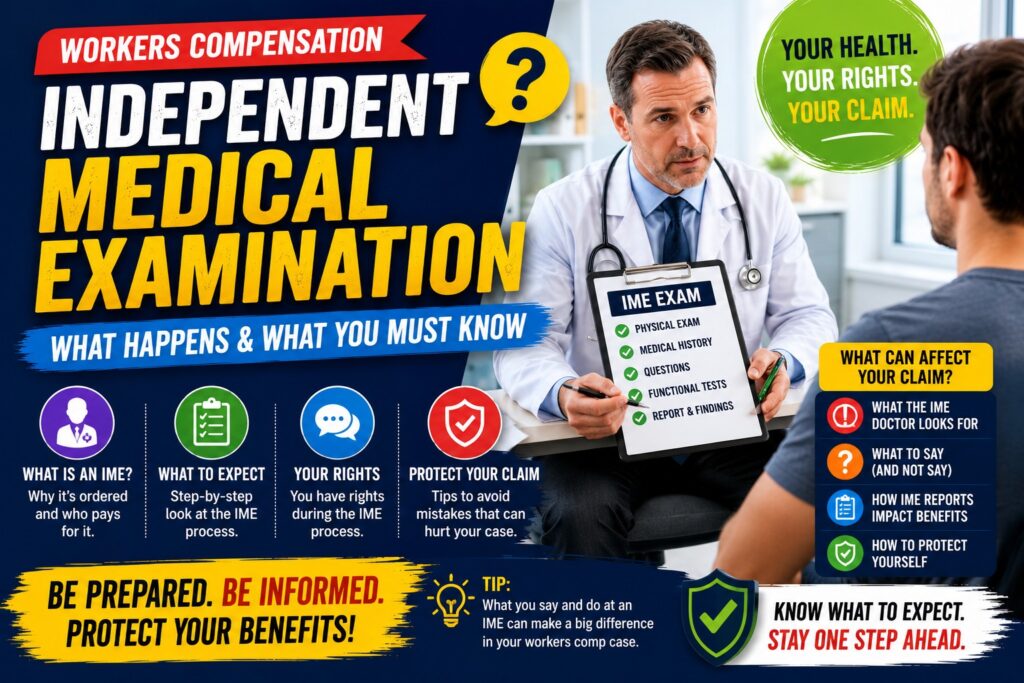
An independent medical examination, often called an IME, is a medical exam requested by the insurance company or employer to get a second opinion on your injury.
The doctor who performs the exam is not your treating doctor. They are hired by the insurance company to evaluate your condition and write a report based on their findings.
That report can then be used to question your injuries, reduce your benefits, or deny your claim entirely.
So while the name says “independent,” there is quite a bit of debate about how truly independent these exams really are.
Why Insurance Companies Request an IME
Insurance companies request an independent medical examination for a few common reasons.
They may feel your treating doctor’s opinion is too favorable toward you. They may want to challenge the severity of your injury. They may want to argue that you have reached maximum medical improvement, meaning they believe you are as healed as you are going to get and they can stop paying for treatment.
Sometimes they request one when a claim is expensive or when the injured worker is asking for a large settlement. The IME becomes a tool to push back on that request.
Understanding why the IME was requested in your case can help you prepare for it the right way.
Is an Independent Medical Examination Really “Independent”?
This is one of the biggest misconceptions workers have.
The doctor performing your independent medical examination is chosen and paid by the insurance company. That does not mean every IME doctor is dishonest, but it does mean they have a financial relationship with the insurer.
Studies have shown that IME doctors tend to produce findings that are more favorable to the party that hired them. Some doctors make a significant portion of their income from performing these exams, which creates an obvious conflict of interest.
So while the exam is called “independent,” you should approach it knowing that the doctor’s conclusions may not always align with those of your own treating physician.
What Happens During an IME Appointment
When you arrive for your independent medical examination, the visit is typically shorter than you might expect. These exams often last anywhere from 15 to 45 minutes, sometimes even less.
The doctor will review your medical records, ask you questions about your injury, your symptoms, and your daily life, and then perform a brief physical exam.
After the appointment, they write a detailed report that goes directly to the insurance company. You do not get to review it before it is submitted.
That report carries a lot of weight in your case.
What Questions Will the IME Doctor Ask
The IME doctor is going to ask you a lot of questions. Some will seem simple. Others will feel like they are trying to catch you off guard.
Common questions include:
How did your injury happen? What symptoms are you currently experiencing? What activities are you able to do at home? What activities are you unable to do because of your injury? Have you had any prior injuries to the same area? Are you currently working or looking for work? What is your typical day like?
Be honest. Do not exaggerate your symptoms, but do not downplay them either. Answer the questions as accurately as you can based on your worst days, not your best days.
What the IME Doctor Looks for During the Exam
The doctor performing the independent medical examination is trained to spot inconsistencies.
They will observe how you walk into the room, how you sit, how you move during the exam, and even how you behave when they think you are not being evaluated.
They look for things like:
Whether your reported symptoms match your physical examination findings Whether your movements during the exam match what you claim you cannot do Signs of symptom exaggeration or what they call “non-organic findings” Whether your injuries are consistent with how you say they happened
This is why it is so important to be completely consistent at all times. From the parking lot to the waiting room to the exam table, assume everything is being observed.
Can an IME Hurt Your Workers Comp Claim
Yes, an independent medical examination absolutely can hurt your workers’ comp claim if you are not careful.
The IME report is one of the most powerful documents in your case. If the doctor concludes that your injury is not as severe as your own doctor says, or that you can return to work when your doctor disagrees, that creates a direct conflict in your case.
That conflict gives the insurance company grounds to reduce your benefits, stop paying for treatment, or deny your claim outright.
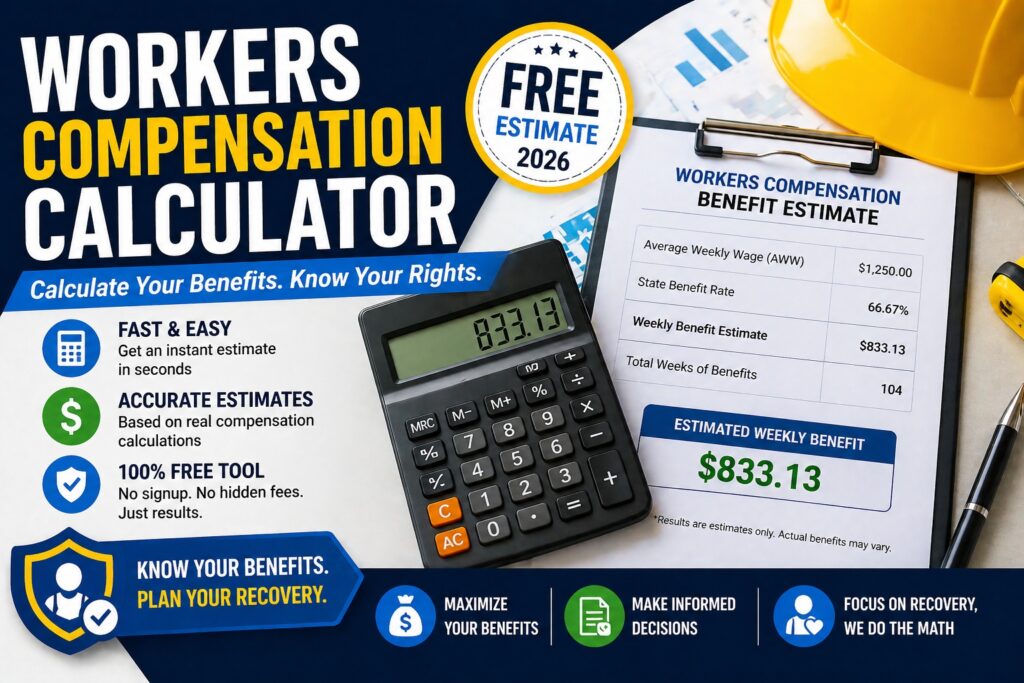
To understand how your benefits could be impacted, check out the Workers Compensation Calculator to get a general idea of what you may be entitled to before the IME results come in.
Common Tricks Insurance Companies Use During IMEs
There are a few things insurance companies do that injured workers should know about.
Hiring doctors who are known to side with insurers. Some IME doctors have track records of consistently producing findings favorable to insurance companies.
Scheduling the exam far from your home. This creates additional stress and can make it harder for you to attend, which could hurt your case if you miss the appointment.
Requesting surveillance before the exam. Insurance companies sometimes watch claimants before the IME to gather footage that contradicts what they say during the exam.
Sending you to a specialist who does not treat your type of injury. This can result in an evaluation that misses important findings.
Being aware of these tactics helps you stay one step ahead.
What NOT to Say at an Independent Medical Examination
This is really important. What you say during your independent medical examination can be used against you.
Do not say things like:
“I am feeling a lot better lately.” “I can do most things, I just have some pain.” “I do not really need much medication anymore.” “I have been pushing through it and doing my normal activities.”
Even casual small talk can be used to undermine your claim. If the doctor asks how you are doing, give an accurate answer based on your overall condition, not just how you feel that particular day.
Also, never lie or exaggerate. That can destroy your credibility and result in your claim being denied entirely.
How to Prepare Before Your IME Appointment
Preparation is everything when it comes to an independent medical examination.
Here is what you should do before your appointment:
Review your medical records so you are clear on your diagnosis, treatment history, and what your doctor has documented. Write down all your symptoms and how they affect your daily life. Note your limitations clearly, including what you cannot do, what causes pain, and how your sleep and daily routine have been affected. Bring a support person if allowed, as some states allow you to bring someone with you. Arrive on time and be polite but careful in everything you say.
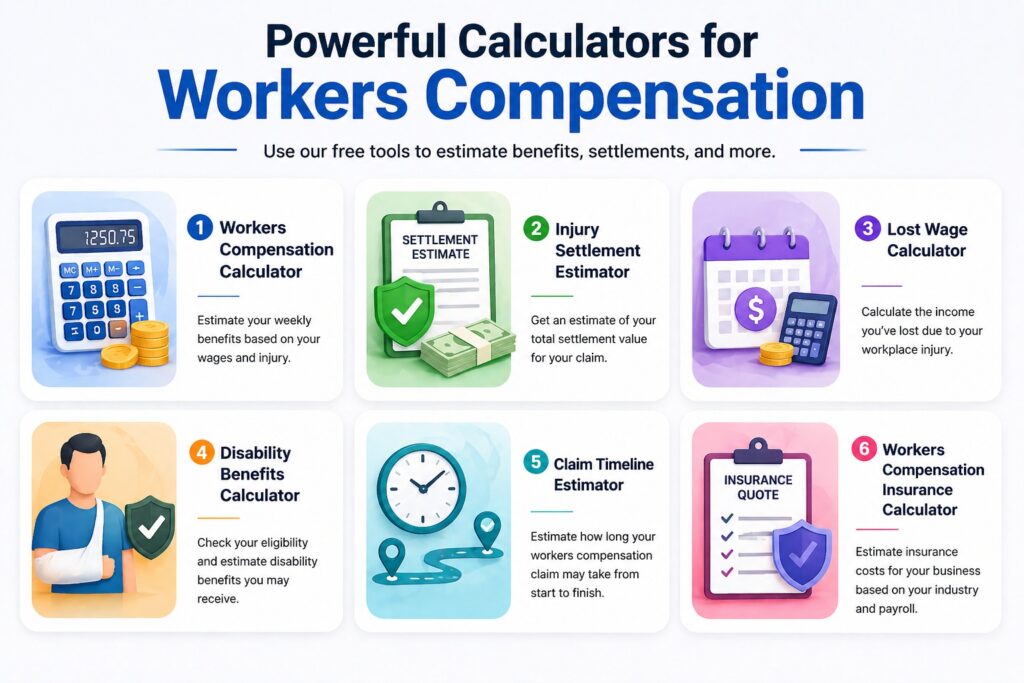
If you are also trying to understand the financial side of your claim, the Injury Settlement Estimator can give you a clearer picture of what your case may be worth.
Should You Bring Medical Records to an IME
The IME doctor should already have your records because the insurance company typically provides them. However, it is a good idea to have your own copies available.
If the doctor does not seem familiar with your medical history, having your records with you ensures they have access to all the relevant information.
Do not bring records that could hurt your case, such as documents related to prior injuries in the same area unless they are clearly relevant.
Talk to your lawyer before deciding exactly what to bring.
Can You Fail an Independent Medical Examination?
There is no passing or failing in the traditional sense, but the IME doctor can produce a report that is very damaging to your claim.
If the doctor concludes that you are not injured, that your injury is pre-existing, or that you are capable of returning to full duty work when you are not, that is the equivalent of a failed exam from your claim’s perspective.
This is why preparation matters so much. And if the results come back unfavorably, remember that you have options to challenge them.
What Happens After the IME Report Is Submitted
Once the IME doctor submits their report, the insurance company reviews it and decides what to do next.
They may use the report to:
Cut off your temporary disability benefits Deny payment for future medical treatment Argue that you have reached maximum medical improvement Lower the value of any settlement offer
You are entitled to receive a copy of the report. Review it carefully. If there are inaccuracies or if the findings contradict your treating doctor’s records, document those differences right away.
What If the IME Doctor Disagrees With Your Doctor
This happens a lot and it creates what is called a “battle of experts.”
When the IME doctor and your treating doctor disagree, the case often goes before a workers’ comp judge or hearing officer who has to decide which opinion is more credible.
Your treating doctor typically has an advantage here because they have been monitoring your condition over time, while the IME doctor only spent a short time with you.
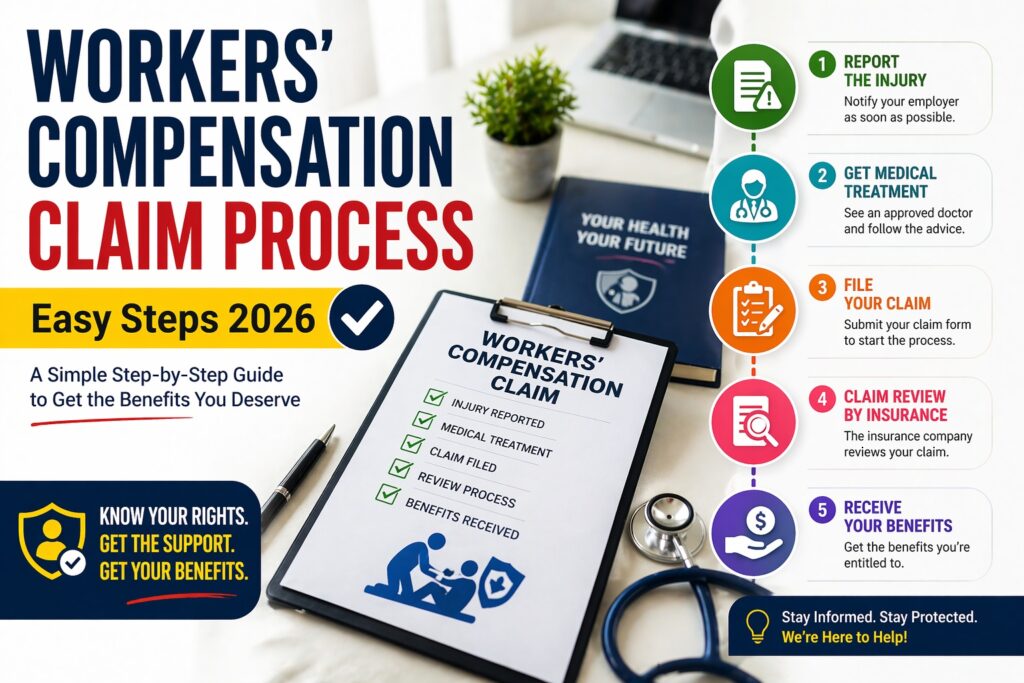
Your attorney can help present evidence supporting your treating doctor’s conclusions. For more on handling disputes in your case, check out our guide on Workers Compensation Claim Process.
Can You Challenge an IME Report
Yes, and in many cases, you should.
Your attorney can request a second opinion from another independent doctor. They can also cross-examine the IME doctor if your case goes to a hearing, highlighting inconsistencies in their findings or conflicts of interest in their business relationship with the insurance company.
You can also gather additional medical evidence such as updated test results or records from specialists to support your treating doctor’s opinion.
Challenging an IME report is a normal part of the workers’ comp process. It does not mean you are being difficult. It means you are protecting your rights.
How IME Results Affect Settlement and Benefits
The outcome of an independent medical examination has a direct effect on what you get offered in a settlement.
If the IME report is favorable, the insurance company may be more willing to offer a fair settlement. If the report is unfavorable, you can expect a lower offer or a fight over your benefits.
This is why it is so important to understand the IME process before it happens. Once the report is submitted, you are reacting to it. Preparing beforehand puts you in a much stronger position.
Real Examples of IME Workers Comp Cases
Case 1: A warehouse worker with a back injury was sent for an independent medical examination after six months of treatment. The IME doctor concluded he could return to light duty. His treating physician strongly disagreed. His attorney presented updated MRI results that supported the treating doctor’s opinion, and the judge sided with the worker.
Case 2: A nurse who injured her shoulder was recorded by surveillance two days before her IME lifting grocery bags. The IME doctor referenced this in his report. Her benefits were reduced. The moral: assume you are being watched in the weeks leading up to your exam.
Case 3: A construction worker downplayed his pain during the IME because he did not want to seem weak. The IME report reflected minimal impairment. This significantly lowered his settlement offer. Always be honest about your worst days.
Should You Hire a Lawyer Before an IME
Absolutely, yes.
If you have not already spoken to a workers’ comp attorney, do it before your independent medical examination, not after.
An experienced attorney can help you prepare for the exam, advise you on what to say and what to avoid, and be ready to challenge any unfavorable findings in the report.

For more guidance on this, read our full breakdown on Do I Need a Lawyer for Workers Compensation?
Most workers’ comp attorneys work on a contingency basis, meaning they only get paid if you win. There is very little reason not to at least consult one before your IME.
FAQs
Can I refuse an independent medical examination? In most cases, no. Refusing an IME can result in your benefits being suspended or your claim being denied. Check your state’s specific rules, but generally you are required to attend.
How long does an IME usually take? Most IME appointments last between 15 and 45 minutes. The report itself may take a week or two to be submitted.
Can I record my IME appointment? This depends on your state. Some states allow it, others do not. Ask your attorney before you try to record.
Can the IME doctor prescribe treatment? No. The IME doctor is there to evaluate and report, not to treat you.
What if I disagree with the IME findings? You can challenge them through your attorney, by getting a second opinion, or by presenting additional medical evidence at a hearing.
Conclusion
An independent medical examination is not something you should walk into unprepared. It is one of the most important events in your workers’ comp case, and the outcome can affect everything from your benefits to your final settlement.
Now that you know what to expect, how to prepare, and what traps to avoid, you are in a much better position to protect your claim.
If you have not already, consult a workers’ comp attorney before your independent medical examination. Review your medical records. Know your symptoms inside and out. And never assume the exam is just a formality.
Your health and your financial future depend on getting this right.
Have questions about your claim or what your case might be worth? Start with our free Workers Compensation Calculator or try the Injury Settlement Estimator to get a better sense of where you stand before your IME appointment.
Sponsored: 80+ Free Online Tools : www.toolsmaverick.cloud