


If you got hurt at work and someone told you to “just use a worker comp settlement calculator,” you probably thought — okay, but how does that even work? What numbers do I put in? And will the result actually mean anything?
That confusion is completely normal. Most people have never had to deal with a workers’ comp claim before, and the whole process can feel overwhelming. But here is the good news: a worker comp settlement calculator is one of the simplest tools you can use to get a rough idea of what your case might be worth before you ever talk to an insurance company or sign anything.
In this blog, we are going to break it all down in plain English. No legal jargon. No confusing math. Just a clear explanation of how a worker comp settlement calculator works, what it looks at, and how you can use one to feel more confident about your situation.
What Is a Worker Comp Settlement Calculator?
A worker comp settlement calculator is an online tool that helps injured workers estimate how much money they might receive as a settlement from their workers’ compensation claim.
You put in some basic information like your weekly wages, the type of injury you had, how long you were out of work, and whether your injury is permanent and the calculator gives you a ballpark number.
It is not a guarantee. It is not legal advice. But it gives you something important: a starting point. When you know roughly what your case could be worth, you are in a much better position to talk to an insurance adjuster or a workers’ comp attorney.
You can try the Injury Settlement Estimator right now to get a quick idea of your potential payout based on your specific injury type.
Why Do People Use a Worker Comp Settlement Calculator?
There are a few big reasons why injured workers look up a worker comp settlement calculator:
They want to know if they are being lowballed. Insurance companies often offer quick settlements that are way below what the worker actually deserves. If you use a worker comp settlement calculator first, you can spot a bad offer right away.
They feel lost in the process. When you are injured, dealing with paperwork and phone calls is exhausting. A calculator helps you understand the numbers without having to decode legal documents.
They are deciding whether to settle or keep fighting. A worker comp settlement calculator helps you compare what is being offered to what you might actually deserve — which helps you make a smarter decision.
They want to prepare before talking to a lawyer. Walking into a free consultation with some numbers already in hand makes the conversation much more productive.
What Does a Worker Comp Settlement Calculator Look At?
Every calculator is a little different, but most worker comp settlement calculators look at these core factors:
1. Your Weekly Wage Before the Injury
Workers’ comp benefits are usually based on a percentage of your average weekly wage. In most states, you receive around two-thirds of your regular pay while you are out of work. Your wage is the foundation of almost every calculation.
2. The Type and Severity of Your Injury
A sprained wrist and a broken back are not going to result in the same settlement. The more serious the injury, the higher the potential payout. Injuries that cause permanent damage or limit your ability to work long-term will significantly increase your estimate in a worker comp settlement calculator.

If your injury involves your back, you can also read our detailed guide on Workers Compensation Settlements for Back Injury to understand what those cases typically look like.
3. Whether Your Injury Is Permanent
This is one of the biggest factors. If your doctor says you have reached maximum medical improvement (MMI) and you still have limitations, you may qualify for a permanent disability rating. That rating directly affects how much money a worker comp settlement calculator will estimate for you.
4. Your State
Every state has different rules about workers’ comp. Some states are more generous than others. A worker comp settlement calculator that does not ask about your state may give you inaccurate results. Always make sure the tool you are using accounts for your location.
5. Medical Costs
If you had surgeries, physical therapy, or ongoing treatments, those costs may be included in your settlement. A worker comp settlement calculator will sometimes ask about your total medical expenses to factor them in.

If your injury required surgery, check out our guide on Workers Comp Settlement for Surgery for a better understanding of how surgical costs play into your final number.
How to Use a Worker Comp Settlement Calculator Step by Step
Using a worker comp settlement calculator is simpler than it sounds. Here is how to do it:
Step 1: Gather your information. Before you open the calculator, collect your pay stubs, medical records, and any paperwork from your employer or the insurance company. You will need your weekly wage, your diagnosis, and ideally your disability rating if you have one.
Step 2: Open the calculator. Go to the Workers Compensation Calculator and start filling in the fields.
Step 3: Enter your weekly wage. Put in your gross average weekly wage — that is your pay before taxes.
Step 4: Enter your injury details. Choose the type of injury, the body part affected, and how severe it is.
Step 5: Add your medical costs. If the calculator asks, add up your medical bills or the estimated cost of future care.
Step 6: Review your estimate. The worker comp settlement calculator will give you a range. This is your starting point — not a final number, but a useful guide.
What a Worker Comp Settlement Calculator Cannot Tell You
A worker comp settlement calculator is a helpful tool, but it has real limits. Here is what it cannot do:
It cannot account for every detail of your case. Things like your employer fighting the claim, witness testimony, or a dispute about how the injury happened can all change the outcome in ways no calculator can predict.

It cannot replace a lawyer. If your case is complex, disputed, or involves a permanent disability, you really should talk to an attorney. Learn more about Do I Need a Lawyer for Workers Compensation to help you decide.
It cannot guarantee the insurance company will agree. The number you get from a worker comp settlement calculator is an estimate. Insurance companies have their own calculations, and they often start lower.
Common Mistakes People Make When Using a Worker Comp Settlement Calculator
Using the wrong wage. Some people enter their take-home pay instead of their gross weekly wage. Always use your pre-tax earnings.
Ignoring future medical costs. If you will need ongoing care, that should be part of your estimate. Do not just count what you have already spent.
Forgetting about lost wages. The time you spent out of work has real value. Make sure the worker comp settlement calculator you are using includes lost wage calculations, or use our separate Lost Wage Calculator to add that figure in.
Using a generic calculator. Not all calculators are built the same. Use one that is designed for workers’ compensation specifically and accounts for state rules.
A Quick Reference: Factors That Affect Your Settlement
| Factor | Impact on Settlement |
|---|---|
| Weekly Wage | Higher wage = higher benefit base |
| Injury Severity | More severe = higher payout |
| Permanent Disability Rating | Higher rating = larger lump sum |
| Medical Costs | More expenses = larger settlement |
| State Laws | Varies widely by state |
| Return to Work Status | Unable to return = higher settlement |
Should You Settle or Keep Fighting?
This is the question most injured workers struggle with. A worker comp settlement calculator can help you compare your current offer against your estimated value, but ultimately the decision comes down to a few things:
How much ongoing care do you need? If your injury is long-term, a quick settlement might not cover future costs.
Is the offer fair? If the insurance company is offering much less than what the worker comp settlement calculator suggests, that is a sign to push back or get legal help.
How long are you willing to wait? Settlements that go through negotiation or hearings can take months or even years. Sometimes a faster, smaller settlement is worth it for peace of mind.
We Have Collection Of Powerful Calculators
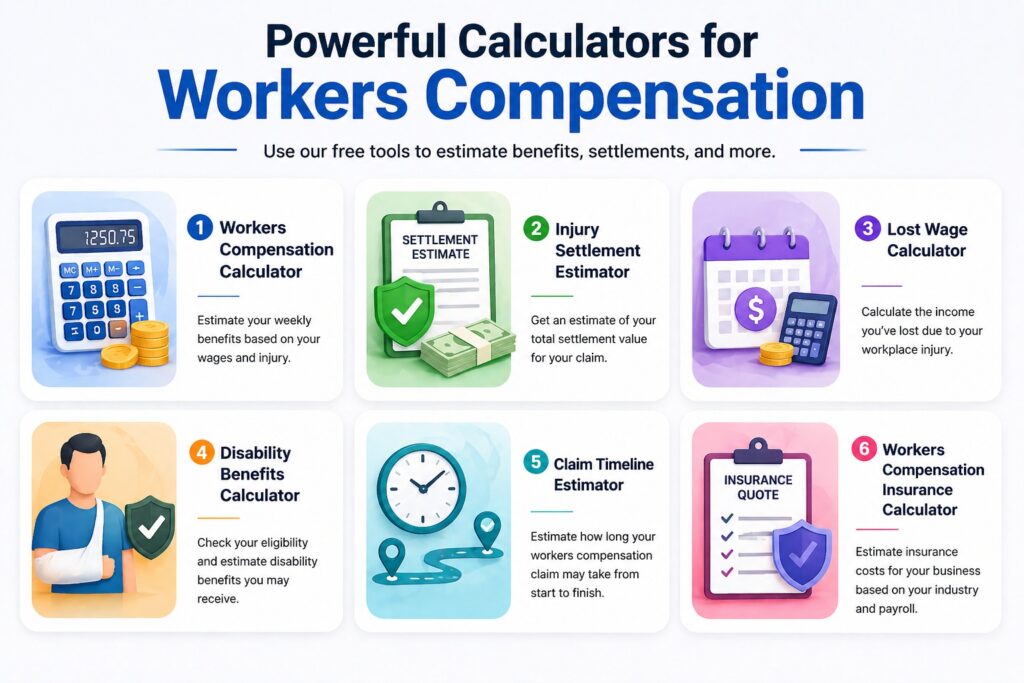
Calculate Your Saving With Our Calculator
Final Thoughts
A worker comp settlement calculator is one of the most useful free resources available to injured workers. It helps you understand your situation, spot low offers, and walk into negotiations with confidence.
But it is just a starting point. Combine it with good information, honest documentation of your injury, and professional advice when you need it.
If you have not tried one yet, use our Injury Settlement Estimator today and see where your claim might stand. Knowledge is the first step toward getting what you deserve.
Have questions about your workers’ comp claim? Drop them in the comments below or share this post with someone who needs it. The more people understand about using a worker comp settlement calculator, the better protected they will be.