
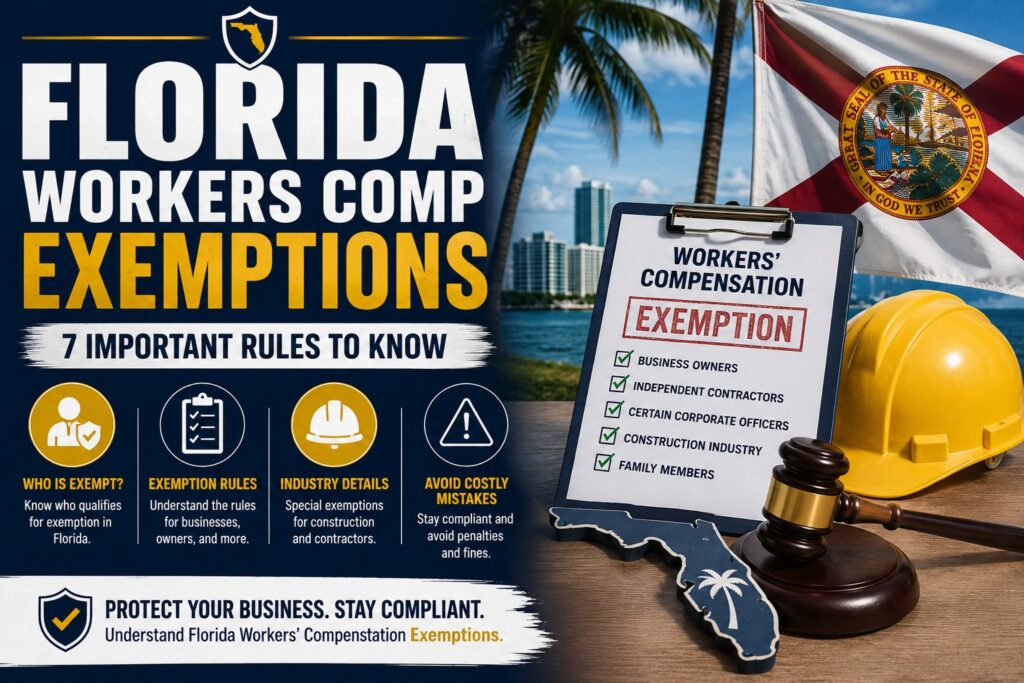
Exemption Workers Compensation Florida: What Business Owners and Workers Need to Know

If you own a small business in Florida or work as an independent contractor, you have probably heard the term exemption workers compensation Florida at some point. But what does it actually mean? And should you apply for one or avoid it?
This guide breaks it all down in plain language. No legal jargon. No confusion. Just clear answers so you can make the right decision for your situation.
What Is an Exemption Workers Compensation Florida?
Workers compensation is insurance that pays for medical bills and lost wages when someone gets hurt on the job. Most employers in Florida are required by law to carry this insurance.
But Florida also allows certain people to opt out of this system. This is called an exemption workers compensation Florida. When you have an exemption, you are officially removing yourself from workers compensation coverage. That means if you get injured at work, you cannot file a workers comp claim.
It sounds risky, and honestly, it can be. But for some business owners, it makes financial sense because it lowers their insurance costs.

Who Can Apply for Exemption Workers Compensation Florida?
Not everyone qualifies. Florida has specific rules about who is eligible.
Corporate Officers If you are an officer of a corporation (like a president, vice president, or secretary) and you own at least 10 percent of the company’s stock, you can apply for an exemption. Up to three officers per corporation can be exempt at the same time.
Members of a Limited Liability Company (LLC) If you are a member of an LLC and you actively work in the business, you may qualify for exemption workers compensation Florida as well.
Sole Proprietors and Partners Sole proprietors and partners in a partnership are not automatically covered by workers comp in Florida. They can choose to opt in or stay out of the system entirely.
Construction Industry Rules Are Different If your business involves construction, the rules are stricter. Exemptions in construction are harder to get, and there are tighter limits. The Florida Division of Workers Compensation keeps a close eye on this industry because fraud has been a known issue there.
How to Apply for Exemption Workers Compensation Florida
The process is done through the Florida Division of Workers Compensation. Here is how it works step by step.
Step 1: Go to the Online Portal Florida handles exemption applications through the Employer Exemption and Jurisdiction System (EJES). You can find it on the official Florida Division of Workers Compensation website.
Step 2: Fill Out the Application You will need your personal information, your company details, your ownership percentage, and your corporate officer title. Make sure everything matches your official business records.
Step 3: Pay the Filing Fee There is a small fee to apply. As of recent updates, it is around $10, though you should verify the current amount when you apply.
Step 4: Wait for Approval Once submitted, the exemption is usually processed within a few business days. You will receive a certificate showing your exemption workers compensation Florida is approved.
Step 5: Renew Every Two Years Exemptions in Florida are not permanent. You must renew your exemption workers compensation Florida every two years. If your exemption expires and you do not renew, you are automatically brought back under workers comp coverage.
Why Do People Choose to Get an Exemption?
The main reason is money. Workers compensation insurance can be expensive, especially in higher-risk industries. If you are a business owner who is also doing the physical work yourself, carrying workers comp coverage on yourself adds to your overhead.
By filing for exemption workers compensation Florida, you remove yourself from the policy, which can lower the premium your business pays.
Some owners also feel they can manage their own risk through private health insurance or other coverage. That is a personal choice, but it comes with real consequences if something goes wrong.
The Risks of Getting an Exemption Workers Compensation Florida
This is the part many people skip over, and it is really important.
When you hold an exemption workers compensation Florida, you give up your right to workers comp benefits. That means:
You cannot get your medical bills paid through workers comp if you are hurt on the job. You cannot receive wage replacement benefits while you are recovering. You may have to pay out of pocket or rely on personal health insurance, which often does not cover workplace injuries the same way.
For some people, this trade-off makes sense. For others, it is a big gamble. Think carefully before deciding.
If you are not sure whether an exemption is right for your situation, it might help to first understand how workers compensation benefits work in general. Our guide on how to qualify for workers compensation walks you through the basics so you can compare your options clearly.
What Happens to Your Employees When You Get an Exemption?
Here is a key point that trips up a lot of small business owners. Getting an exemption workers compensation Florida for yourself does not mean your employees are also exempt.
If you have employees, you still have to carry workers compensation insurance for them. The rules in Florida are clear. Most businesses with four or more employees must carry coverage. Construction businesses must cover even one employee.
Your exemption only applies to you as the owner or officer. Your team is still covered, and you are still responsible for their policy.

Exemptions in the Construction Industry: Extra Rules Apply
Construction is a high-risk industry, and Florida treats it differently when it comes to exemption workers compensation Florida.
In construction, corporate officers can still apply for an exemption, but there are additional limits. For example, an exempt officer in construction cannot be listed on a policy as a covered employee elsewhere at the same time. The state also does audits more frequently to make sure exemptions are not being used to commit fraud or avoid covering actual workers.
If you are in roofing, electrical, plumbing, or any skilled trade, read the rules carefully before applying.

Common Mistakes People Make With Exemption Workers Compensation Florida
Forgetting to Renew The two-year renewal requirement catches many people off guard. If you miss it, you lose your exemption and could face penalties if your business goes without proper coverage.
Thinking It Covers Employees Too As mentioned above, your personal exemption does not extend to your workers. This is one of the most common misunderstandings.
Getting Hurt Without Backup Coverage Some business owners get an exemption to save money but forget to line up alternative health coverage. Then they get injured and face a nightmare of medical bills. Before you drop workers comp coverage on yourself, make sure you have a real plan.
Using an Exemption to Misclassify Workers Some businesses try to use the exemption system to misclassify employees as owners or officers to avoid paying workers comp premiums. This is fraud and Florida investigates these cases seriously.
How Exemption Affects Workers Compensation Calculations
If you are still covered by workers comp and ever need to file a claim, understanding how benefits are calculated matters a lot. Use our Workers Compensation Calculator to get a rough idea of what your benefits might look like based on your wage and injury type.
You can also check the Workers Compensation Insurance Calculator to see how removing yourself from a policy with an exemption might change what your business pays in premiums.
Should You Get an Exemption Workers Compensation Florida?
Here is a simple way to think about it.
You might want to consider getting exemption workers compensation Florida if you are a business owner who does minimal physical work, you have solid personal health insurance that covers workplace injuries, and lowering your insurance premium makes a meaningful difference to your budget.
You should probably skip the exemption if you do hands-on physical work every day, you do not have strong personal health insurance, or you work in a dangerous industry like construction or roofing.
There is no universal right answer. It depends on your situation, your health coverage, and your risk tolerance.
For more help understanding how workers comp works before you make your decision, the Workers Compensation Claim Process guide is a great starting point.
Quick Reference: Exemption Workers Compensation Florida Summary
| Factor | Details |
|---|---|
| Who Can Apply | Corporate officers, LLC members with 10%+ ownership |
| Maximum Exemptions Per Corp | 3 officers |
| Renewal Period | Every 2 years |
| Filing Fee | Approximately $10 |
| Employees Still Need Coverage | Yes, always |
| Construction Rules | Stricter, extra limits apply |
Final Thoughts
Understanding exemption workers compensation Florida is not just paperwork. It is a real decision that affects your financial protection if something goes wrong on the job.
Take your time, look at your health insurance situation, and make sure you understand what you are giving up before you apply. The cost savings can be real, but so can the consequences.
If you found this helpful, share it with a fellow business owner in Florida who might be wrestling with the same questions. And if you are still unsure about your workers comp rights or options, explore more guides on our site to build a clearer picture of what you are entitled to and what choices you have.
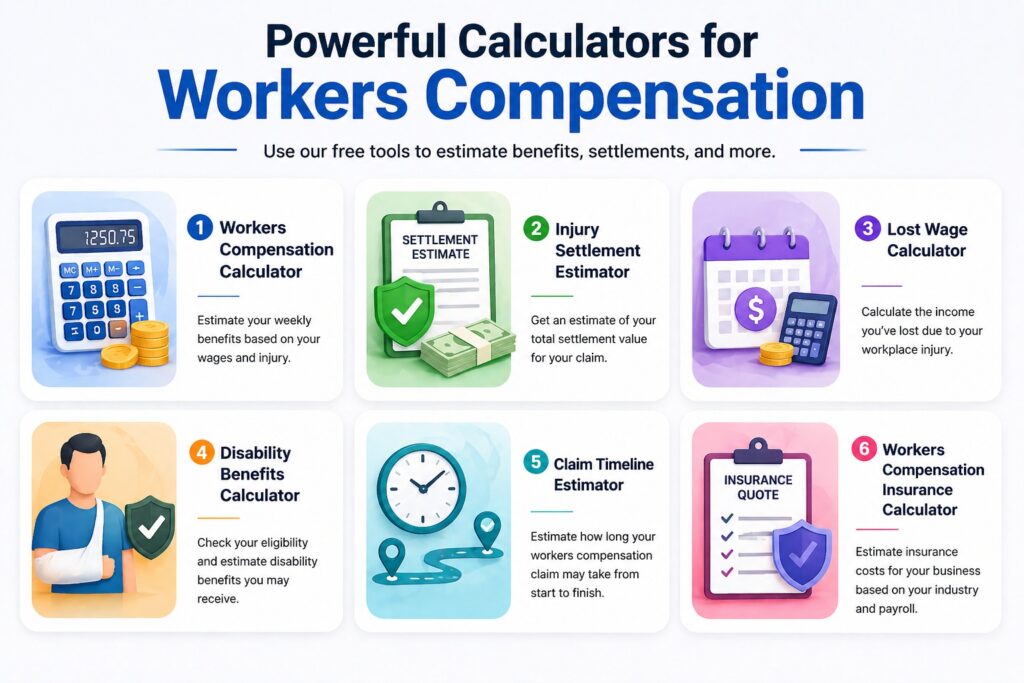
Helpful Tools for Florida Workers Compensation
Before you make any decisions about exemption workers compensation Florida, it helps to run some numbers first. These free tools can give you a clearer picture of what coverage is worth and what you might be giving up.
Use the Workers Compensation Calculator to estimate what your benefits would look like if you ever filed a claim. If a workplace injury leads to a settlement, the Injury Settlement Estimator can help you understand what that might be worth in your case.
Worried about lost income during recovery? The Lost Wage Calculator shows you how much you could lose if you are out of work after an injury. And if your injury leads to a longer term disability, check the Disability Benefits Calculator to see what ongoing support might look like.
Not sure how long your claim could take? The Claim Timeline Estimator gives you a realistic idea of the process from start to finish. Finally, if you want to see how an exemption actually affects what your business pays, the Workers Compensation Insurance Calculator breaks down your potential premium costs clearly.
Additional Plus 80+ Free Online Tools ToolsMaverick.cloud