
Back pain is one of the most common reasons people miss work. But when your back injury happens on the job, the situation gets a lot more complicated than just resting and recovering. You suddenly have to deal with medical bills, lost wages, insurance adjusters, and legal terms you have never heard before.

If you are going through this right now, you are not alone. Millions of workers file claims every year, and a huge number of them involve back injuries. The good news is that workers compensation settlements for back injury exist to protect you financially while you heal.
This guide breaks everything down in plain, simple language so you know exactly what to expect and how to get the best possible outcome.
Why Back Injuries Are So Common in Workers Comp Cases
Back injuries happen in almost every type of job. You do not have to work in construction or a warehouse to hurt your back at work. Office workers, nurses, delivery drivers, retail employees, and teachers all deal with back injuries too.
Some of the most common causes include lifting heavy objects the wrong way, slipping and falling, sitting in a bad position for too long, car accidents while driving for work, and repetitive movements that slowly damage the spine over time.
Because back injuries can range from mild muscle strains to serious spinal damage, the value of workers compensation settlements for back injury can vary a lot. That is why it is important to understand how the process works before you accept any offer.
What Does a Workers Comp Back Injury Settlement Actually Cover?
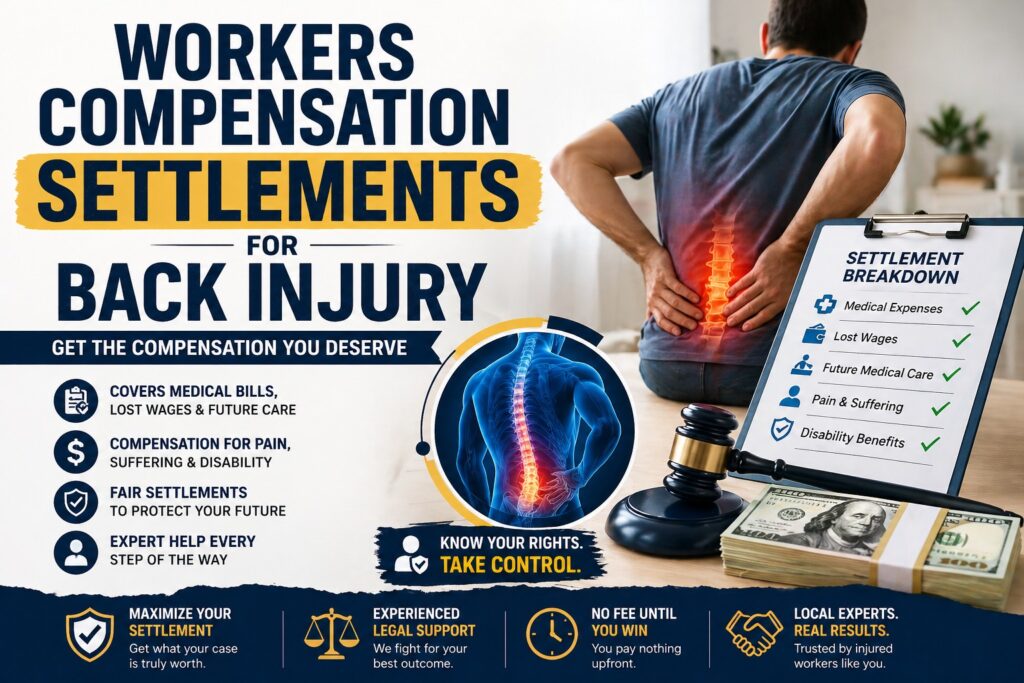
When you settle a back injury claim, you are typically getting compensation for a few different things:
Medical expenses cover all the treatment you have had and may need in the future. This includes doctor visits, physical therapy, MRIs, surgery, medications, and ongoing care.
Lost wages are payments for the time you could not work because of your injury. If you used our Lost Wage Calculator, you already have a good estimate of what you may be owed.
Permanent disability payments apply if your injury caused lasting damage that limits what you can do at work or in daily life. This is often where the bigger settlement numbers come from.
Pain and suffering is not always covered under workers comp, but in some states and specific situations, it can be part of the picture.
Understanding what goes into your claim helps you negotiate better and avoid leaving money on the table.
How Much Can You Get? Realistic Settlement Ranges
This is the question everyone asks first, and honestly, it depends on many things. Workers compensation settlements for back injury do not follow a one size fits all formula.
Here is a general idea of what settlements look like based on injury severity:
| Injury Type | Typical Settlement Range |
|---|---|
| Mild strain or sprain | $10,000 to $40,000 |
| Herniated or bulging disc | $40,000 to $150,000 |
| Spinal surgery needed | $100,000 to $250,000+ |
| Permanent partial disability | $75,000 to $300,000+ |
| Full disability or paralysis | $500,000 to $1 million+ |
These numbers are not guaranteed. The state you live in, your employer’s insurance policy, your job type, and your medical records all play a huge role. To get a more personalized number, try using the Injury Settlement Estimator which walks you through the main factors affecting your case.
Key Factors That Affect Your Settlement Amount
Several things will either increase or decrease the value of workers compensation settlements for back injury. Knowing these in advance helps you build a stronger case.
The severity of your injury matters most. A minor strain heals in weeks. A herniated disc or spinal fracture can change your life permanently. The more serious the injury, the higher the potential settlement.
Medical documentation is everything. Gaps in treatment, not following your doctor’s orders, or failing to get proper imaging done can all reduce your settlement. Keep all records, attend every appointment, and get everything in writing.
Your ability to return to work directly affects the payout. If you can go back to your old job fully, the settlement is usually lower. If your injury limits you permanently or forces you into a lower paying role, you can claim more.
The state you live in has a huge impact. Every state has its own workers comp rules and benefit limits. You can check out Workers Compensation Benefits by State to understand what your state allows.
Pre existing conditions can complicate things. Insurance companies often try to blame a prior back issue for your current pain. A good doctor and attorney can help show that your work injury made things worse, which still qualifies for coverage.
Calculate your age with Our Free Easy tool Age Calculator
How the Settlement Process Works Step by Step
Most people do not know how the process actually flows. Here is a simple breakdown so you are never caught off guard.
Step one is reporting the injury to your employer right away. Do not wait. Delays can hurt your claim. Check our guide on the Workers Compensation Claim Process for a detailed walkthrough.
Step two is getting medical treatment. Go to a doctor approved by your employer’s insurance if required in your state. Make sure every symptom is properly documented.
Step three is the insurance company reviewing your claim. This is where an adjuster gets involved. Be careful here. Adjusters work for the insurance company, not for you. Learn what mistakes to avoid by reading about Workers Compensation Claims Adjusters.
Step four is reaching maximum medical improvement, or MMI. This is the point where your doctor says your condition has stabilized. After MMI, both sides start talking seriously about settlement numbers.
Step five is negotiating the settlement. You can do this with or without an attorney, but having one dramatically increases most settlements.
Step six is finalizing and signing. Once both parties agree, you sign paperwork, and the settlement is paid out. In most cases, this ends your claim permanently, so do not rush it.
Lump Sum vs Structured Settlement: Which Is Better?
When it comes to workers compensation settlements for back injury, you usually have two choices for how you receive the money.
A lump sum means you get the full amount in one payment. This gives you control of the money right away. Many people prefer this because they can pay off medical debt, cover bills during recovery, or invest it.
A structured settlement spreads payments out over time, often monthly or yearly. This can provide long term financial stability, especially if your injury prevents you from working for years.
Neither option is automatically better. It depends on your personal financial situation, how severe your injury is, and how long your recovery is expected to take. Use the Disability Benefits Calculator to compare how ongoing payments might look compared to a one time amount.
Are Your Settlement Payments Taxable?
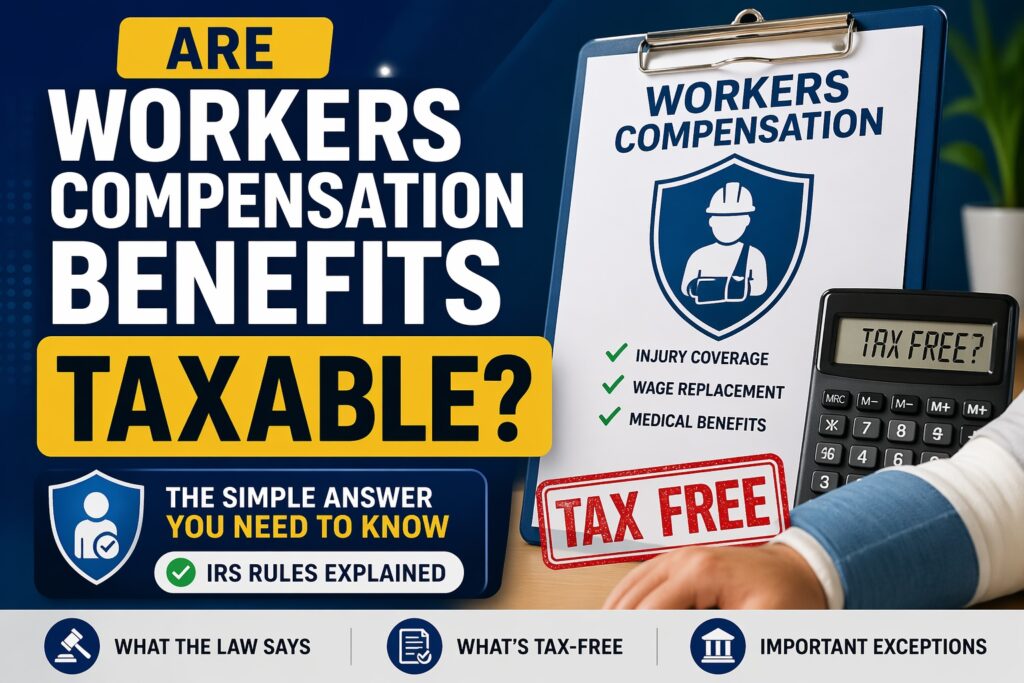
This is a question a lot of injured workers miss until it is too late. The general rule is that workers comp settlements are not taxed as regular income. However, there are exceptions.
If you also receive Social Security Disability benefits at the same time, part of your settlement could be considered taxable due to something called the offset rule. This gets complicated quickly.
Also, if any part of your settlement covers things like punitive damages or certain types of non physical losses, that portion could be taxable. Understanding workers compensation benefits taxable income IRS rules 2026 is really important here. You do not want to settle for a certain amount and then find out you owe more in taxes than you expected.
For a detailed breakdown, read the full guide on Workers Compensation Benefits Taxable Income IRS Rules 2026 to understand exactly what applies to your situation.
Should You Hire a Workers Comp Attorney?
A lot of people try to handle workers compensation settlements for back injury on their own to save money. This often backfires. Insurance companies have experienced legal teams working for them. Having someone in your corner who knows the system makes a real difference.
Most workers comp attorneys work on contingency. That means they only get paid if you win. The fee is usually a percentage of your settlement, so you do not pay anything upfront.
Studies and real world data consistently show that injured workers represented by attorneys receive significantly higher settlements than those who go it alone. If your injury is serious, getting legal help is almost always worth it.
Common Mistakes That Can Hurt Your Settlement
Avoid these mistakes if you want to protect your claim:
Do not wait to report your injury. Even a few days of delay can raise red flags with insurers. Do not skip medical appointments. Inconsistent treatment history weakens your case. Do not post on social media. Pictures or posts that contradict your injury claims can be used against you. Do not accept the first offer. Initial offers from insurance companies are almost always lower than what you deserve. Do not sign anything without reading it carefully. Some settlements waive your right to future treatment.
Use the Right Tools to Estimate Your Claim
Before you sit across from an insurance adjuster or attorney, it helps to know your numbers. Here are two tools that can help you get a clearer picture:
The Workers Compensation Calculator helps you estimate your weekly benefits based on your wage and state rules.
The Claim Timeline Estimator shows you a rough timeline of how long your claim might take from start to settlement, so you can plan your finances accordingly.
Going into negotiations informed makes a huge difference in the outcome.
Final Thoughts: Know Your Rights and Fight for What You Deserve
Dealing with a back injury at work is hard enough without also having to fight for fair compensation. Workers compensation settlements for back injury are meant to help you recover without financial stress, but getting a fair deal requires knowing the process, avoiding common mistakes, and sometimes getting professional help.
Take the time to document everything, understand what your state allows, and do not rush into accepting a settlement before you know your full options. Your health and your financial future depend on it.
If you found this helpful, share it with someone going through the same situation. And if you want to know more about qualifying and filing, start with How to Qualify for Workers Compensation to make sure your claim is built on solid ground from day one.