
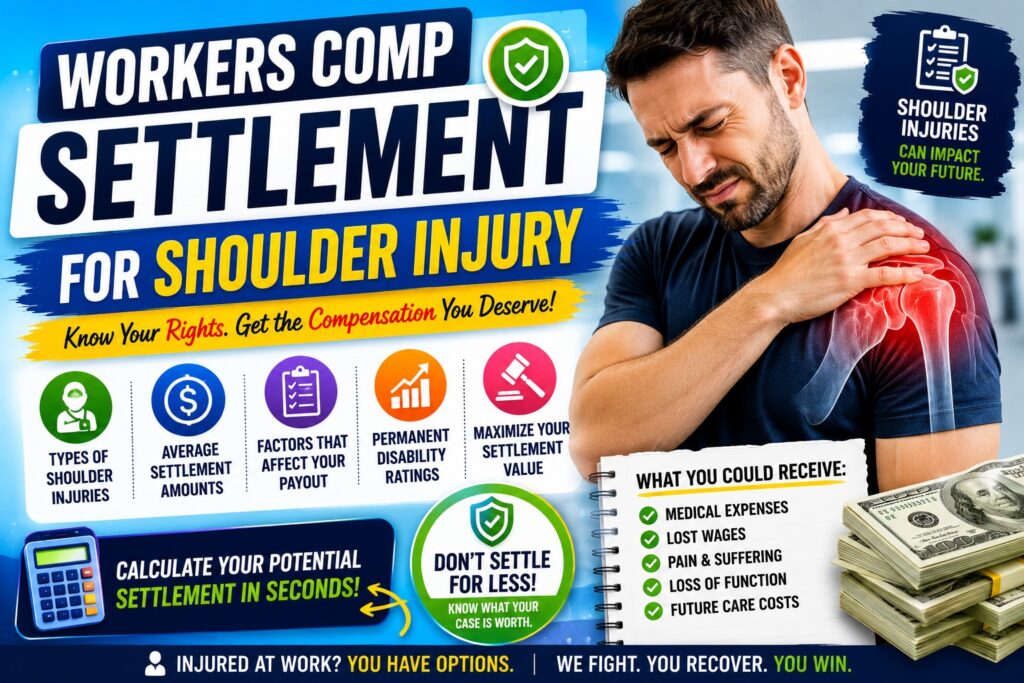
Did You Know a Shoulder Injury Can Be Worth Tens of Thousands in Workers Comp?

If you hurt your shoulder at work, you might be sitting on a significant workers comp claim and not even know it. Shoulder injuries are one of the most common and costly workplace injuries in the United States. They affect your ability to lift, carry, reach, and do everyday tasks, which means they can seriously impact your income and your life.
Getting a fair workers comp settlement for shoulder injury is not always easy. Insurance companies often try to pay as little as possible. But if you understand how the process works, what your injury is worth, and what mistakes to avoid, you can walk away with a settlement that truly covers your losses.
This guide breaks everything down in plain, simple language so you know exactly what to expect.
What Counts as a Shoulder Injury at Work?
Before we talk about settlements, it helps to understand what types of shoulder injuries qualify for workers comp. The good news is that most shoulder injuries that happen on the job or develop because of your job are covered.
Common work-related shoulder injuries include:
- Rotator cuff tears (partial or full)
- Shoulder dislocations
- Labrum tears
- Shoulder impingement syndrome
- Bursitis and tendinitis
- Fractures around the shoulder joint
- AC joint injuries (acromioclavicular joint)
Some injuries happen in a single accident, like a fall or a heavy object hitting your shoulder. Others develop over time from repetitive motions, like lifting boxes, working on an assembly line, or painting overhead. Both types can qualify for a workers comp settlement for shoulder injury.

To learn more about which injuries qualify under workers comp, check out this helpful guide on what injuries qualify for workers compensation.
How Much Is a Workers Comp Settlement for Shoulder Injury Worth?
This is the question everyone wants answered. The honest answer is: it depends. Settlement amounts vary quite a bit based on several factors.
That said, here are some general ranges to give you an idea:
| Type of Shoulder Injury | Typical Settlement Range |
|---|---|
| Minor shoulder strain | $5,000 to $20,000 |
| Rotator cuff tear (non-surgical) | $20,000 to $60,000 |
| Rotator cuff tear (with surgery) | $40,000 to $150,000+ |
| Full shoulder replacement | $75,000 to $200,000+ |
| Permanent partial disability | $30,000 to $100,000+ |
These are rough estimates. Your actual workers comp settlement for shoulder injury could be higher or lower depending on your specific situation.
What Factors Affect Your Settlement Amount?
Several things will influence how much your workers comp settlement for shoulder injury ends up being. Understanding these factors helps you build a stronger case.
1. Severity of the Injury
The more serious your injury, the higher your settlement tends to be. A full rotator cuff tear that requires surgery is worth more than a mild strain that heals with physical therapy.
2. Whether You Needed Surgery
Shoulder surgery, especially rotator cuff repair or shoulder replacement, significantly increases settlement value. If your doctor recommended surgery, your claim is likely worth more. You can also explore how surgery affects payouts in this guide on workers comp settlement for surgery.

3. Permanent Disability Rating
After your treatment ends, a doctor will assess whether you have any permanent impairment. This is called your disability rating, and it directly affects your settlement. Even a 10% to 20% permanent impairment rating can add tens of thousands of dollars to your workers comp settlement for shoulder injury.
4. Lost Wages
If your shoulder injury kept you out of work for weeks or months, your lost wages are part of your claim. The longer you were off work and the higher your salary, the more this adds to your total.
5. Your State’s Laws
Workers comp rules vary by state. Some states are more generous than others when it comes to permanent disability benefits and settlement caps. For example, California has its own unique set of rules, which you can read about here: California workers compensation rates.

6. Your Age and Occupation
Younger workers with physically demanding jobs often receive higher settlements because the injury affects their earning capacity for a longer period of time.
7. Whether You Can Return to Work
If your shoulder injury prevents you from returning to your previous job or any job at all, your settlement will reflect that loss of future earnings.
The Workers Comp Settlement Process for Shoulder Injuries
Here is a step-by-step look at how the workers comp settlement for shoulder injury process typically works.
Step 1: Report Your Injury Tell your employer as soon as possible. Most states have strict deadlines for reporting workplace injuries.
Step 2: Get Medical Treatment See a doctor approved by your employer’s insurance. Keep all records, receipts, and notes from every appointment.
Step 3: Reach Maximum Medical Improvement (MMI) MMI means your condition has stabilized and is not expected to improve much more with further treatment. This is usually when settlement talks begin. Learn more about what MMI means in workers comp.

Step 4: Get a Disability Rating A doctor will rate your permanent impairment, if any. This rating is a key number used to calculate your settlement.
Step 5: Negotiate with the Insurance Company This is where things can get tricky. The insurance company will make an offer, but it is often lower than what you deserve. Having a lawyer or knowing your rights makes a big difference here.
Step 6: Accept or Dispute the Settlement If you agree on an amount, the settlement is finalized. If not, you can request a hearing or go through mediation.
Should You Accept the First Offer?
Almost always, no. The first offer from an insurance company for a workers comp settlement for shoulder injury is rarely their best offer. Insurance adjusters are trained to minimize payouts. Their job is to settle your claim for as little as possible.
Before you accept anything, make sure you understand:
- Whether your medical treatment is truly finished
- What your full disability rating is
- How much time you lost from work
- Whether your injury affects your ability to work in the future
If you are unsure, talking to a workers comp attorney can help. Many offer free consultations. You can also read about whether you need legal help here: do I need a lawyer for workers compensation.

Common Mistakes That Can Hurt Your Settlement
People make avoidable mistakes all the time that end up reducing their workers comp settlement for shoulder injury. Here are the big ones to watch out for.
Waiting too long to report the injury. Every state has a deadline. Missing it can disqualify your claim entirely.
Not following the doctor’s treatment plan. If you skip appointments or stop physical therapy early, the insurance company can argue your injury is not as serious as you claim.
Posting on social media. Insurance companies monitor social media. A photo of you lifting groceries or playing with your kids can be used against you.
Settling before you reach MMI. If you settle too early, you might not know the full extent of your injury or disability rating yet.
Not keeping records. Save every bill, every note, every email related to your injury and treatment.
Can You Estimate Your Settlement Before Negotiating?
Yes, and you should. Going into negotiations without a number in mind puts you at a disadvantage. You can use the Injury Settlement Estimator to get a ballpark figure based on your injury details. You can also use the Workers Compensation Calculator to understand your weekly benefit amounts and total potential compensation.
We Have Collection Of Powerful 70+ free online Calculators access now without Login & Signup
These tools will not replace legal advice, but they give you a solid starting point so you are not flying blind.
What Happens After a Settlement?
Once you agree on a workers comp settlement for shoulder injury, you typically sign a release form. This means you are giving up your right to bring future claims related to this injury. That is why it is so important to make sure your injury is fully understood before signing anything.
Some settlements are structured as a lump sum payment, where you receive the full amount at once. Others are paid out over time. Most injured workers prefer lump sum because it gives them control over the money.
Also keep in mind that workers comp settlements are generally not taxable income under federal law. So what you receive is usually what you keep.
Final Thoughts: Know Your Worth and Fight for It
A shoulder injury can change your life. It can take you away from work, limit your daily activities, and cause real financial stress. Getting a fair workers comp settlement for shoulder injury is not just about money. It is about being compensated fairly for something that happened because of your job.
Do not let the insurance company decide what your injury is worth. Learn the process, keep good records, get proper medical care, and do not settle until you fully understand your rights.
If you are still unsure where to start, explore related guides like how to work out workers compensation and use the free tools available to estimate your benefits.
You deserve a fair workers comp settlement for shoulder injury. With the right information and the right support, you have a strong chance of getting one.
Have questions about your shoulder injury claim? Drop them in the comments below or share this post with someone who needs it. The more people know about their rights, the better outcomes they get.